Japanese Chopsticks & Hashioki: Lengths, Etiquette, and How to Choose
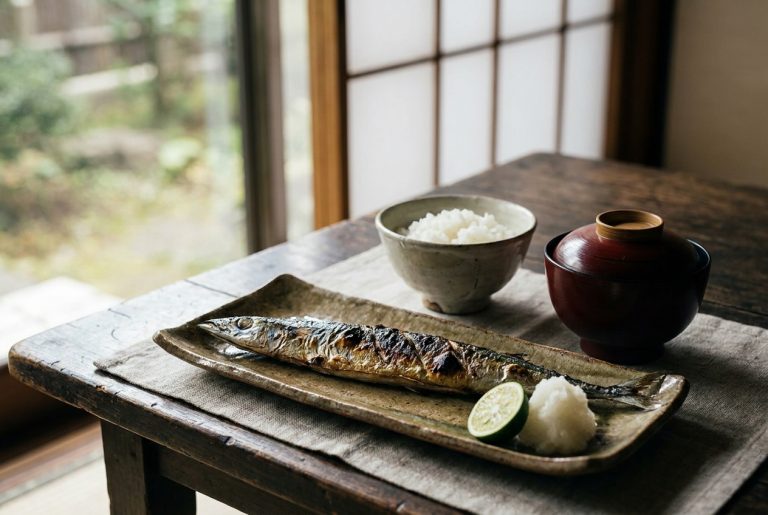
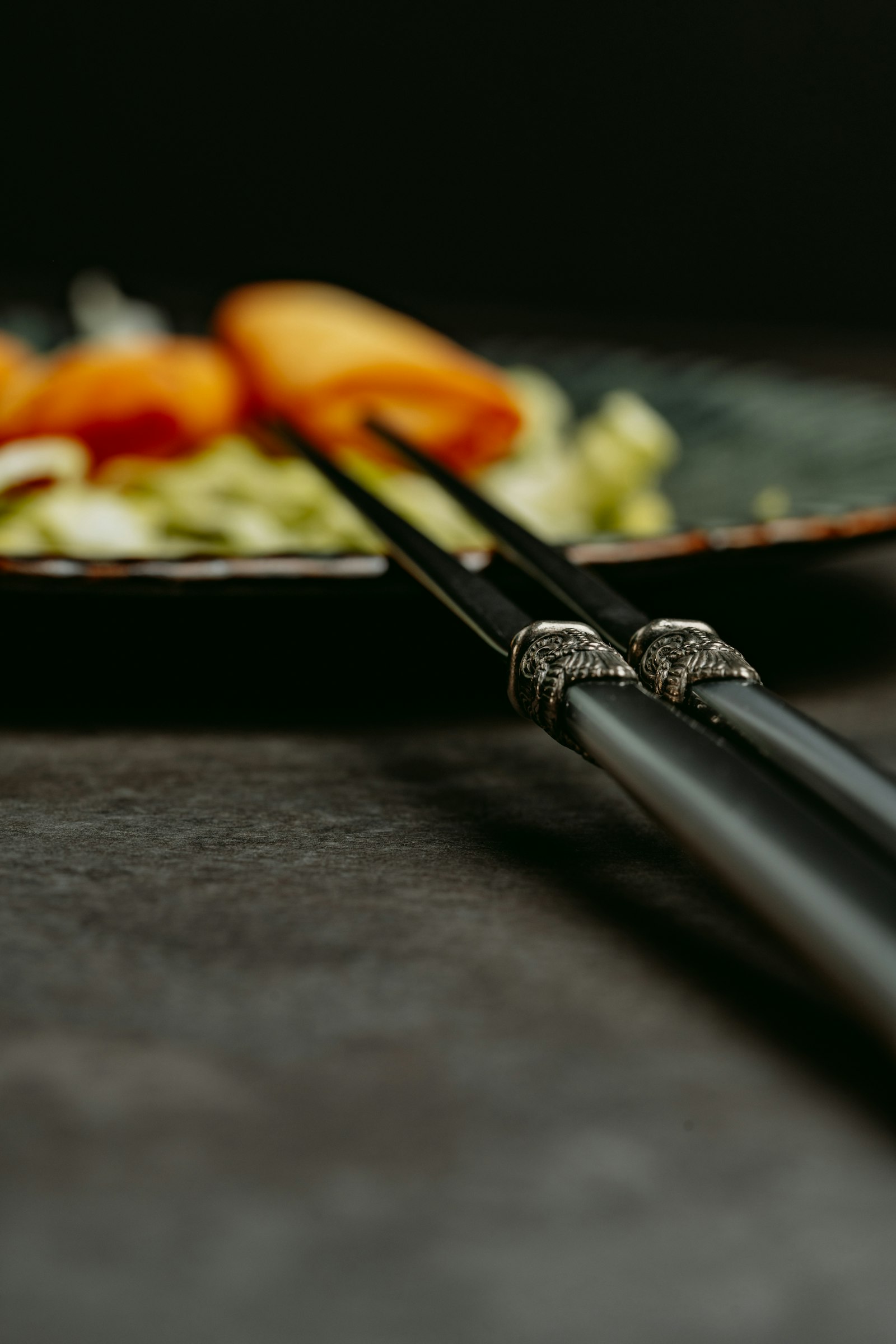
Pick up a pair of Japanese chopsticks and look at the end of them. That taper — the last two centimetres, narrowing to a point fine enough to lift a single soybean or peel a flake of grilled mackerel off the bone — is the entire tool. Everything else about a pair exists to serve it. The length is chosen so those tips land where your hand expects. The lacquer is there so the tips shed rice. And the hashioki, the little rest beside the plate no bigger than a thumb, exists for one reason: those tips have been in your mouth, and they should not touch the table.
Why the Japanese pair is the pointed one
Chopsticks are used across much of East Asia, and the three main traditions are not interchangeable. Chinese pairs run long — roughly 24–27 cm — and end blunt and square, because they are made for reaching into shared dishes at the centre of a round table. Korean pairs are typically flat metal. The Japanese pair is the short, sharp one: an individual’s tool, sized to one person, aimed at food that is served already cut and often boned at the table.
That difference is not decoration. A blunt tip pushes food; a fine tip holds it. If you eat whole grilled fish, tofu that collapses when you look at it, or a mouthful of rice out of a rice bowl held in the other hand, the pointed tip is the one that works. If you mostly serve family-style from big platters, a longer Chinese pair genuinely suits you better, and there is no shame in owning both.
The standard length of chopsticks (and why it comes off your hand)
Length is the one measurement worth being fussy about, and Japan has a measure for it. It is called hitoata-han. Open your thumb and index finger to a right angle, measure the straight distance between the two fingertips — that span is hitoata — and multiply it by 1.5. The result, in centimetres, is the length that will balance in your hand instead of levering against it.
In practice that lands most adults between 21 and 24 cm: men’s pairs are usually sold at about 23–24 cm, women’s at about 21–22 cm, children’s shorter again. Table chopsticks as a category run roughly 18–23 cm. If you are buying one length for a whole household and cannot measure everyone, 22.5 cm is the honest compromise. Anything at 30 cm or more is saibashi — cooking chopsticks, for turning things in hot oil. They are not long dining chopsticks and are miserable to eat with.
Lacquer, bamboo, hardwood: what you are paying for
Most everyday Japanese chopsticks are lacquered wood, and most of those come from one town. Obama, in Fukui prefecture, produces something on the order of 80% of all lacquered chopsticks made in Japan — the local style, Wakasa-nuri, builds up layers of lacquer over shell and pine-needle inclusions, then polishes back down through them so the pattern surfaces from inside the finish. That is why a good pair looks deep rather than painted.
What the material buys you, in plain terms: lacquered wood is light, warm to hold, and sheds rice starch well — the everyday default. Bamboo is cheap, stiff, and pleasantly grippy, and it is the right answer for a first pair you are not precious about. Hardwood with layered urushi — real lacquer, applied and cured in many coats — costs more and repays it in the hand, and it is what most gift pairs are. Some tips are finished with fine grooves or a deliberately matte lacquer so noodles and tofu do not slide; if you eat a lot of soba, that detail matters more than the pattern on the handle.
Country of origin: what “made in Japan” does and does not tell you
Start with the part that surprises people: there is no general legal requirement to print a country of origin on a pair of chopsticks. What Japanese law polices is being misled. Under the origin notice issued beneath the Act against Unjustifiable Premiums and Misleading Representations, the “country of origin” is the country where the last substantial change to the goods took place — and a listing that dresses an imported product in Japanese names and marks without saying where it was made is the specific thing that rule exists to catch.
For chopsticks, the last substantial change is the finishing. A pair designed by a Japanese company, from Japanese timber, but lacquered in Vietnam or China, has that country as its origin — accurately, not pejoratively. So the two phrases you keep seeing mean different things. “Made in Japan” (日本製) is a claim about manufacture. “Japanese brand,” “designed in Japan,” or simply a Japanese company name with no origin line at all is not. The silence is the answer.
Bamboo is where this bites hardest, and it should bother you less than it does. Most inexpensive bamboo chopsticks sold anywhere in the world are made in China, and Chinese bamboo production is genuinely good at this — of the disposable waribashi used in Japan itself, roughly 97% are imported, and almost all of those come from China. Bamboo chopsticks are a commodity and there is nothing wrong with buying them. The mistake is paying a Japanese-craft price for a commodity.
Some place-names on a listing are origin claims, because they name a production district rather than a look. Wakasa-nuri is the lacquer work of Obama, in Fukui prefecture — the town behind roughly 80% of Japan’s domestically made lacquered chopsticks, and a nationally designated traditional craft since 1978. Edo kibashi is Tokyo hardwood work, unlacquered, cut so that the cross-section of the stick changes along its length. Names like these are not decoration, and attaching them to goods finished elsewhere is exactly the misrepresentation the origin rule is written against. If the pair is lacquered, the label should also tell you which lacquer and which core, in the terms set out in the guide to Japanese lacquerware.
Hashioki are quieter still. A ceramic rest costs a few dollars, and its origin is very often simply left off the page — a choice rather than an oversight, and the same habit of informative silence I go through at length in the guide to reading a Japanese tableware listing. If a listing for a lacquered pair or a boxed gift set does not say where it was made, treat that as the answer and price it accordingly. On a $6 bamboo pair, none of this matters. On a $60 lacquered one, it is most of the story.
What not to buy
A short list of things sold constantly that you should walk past.
- Lacquered pairs you intend to put in the dishwasher. Dishwashers run hot water and hold heat through the dry cycle, and sustained heat plus a long soak is exactly what dulls, clouds, and eventually cracks lacquer. If you will not hand-wash, buy plain bamboo or a synthetic pair and keep the lacquer for the table you set on purpose.
- Decorated gift pairs as your daily driver. Inlaid shell and gold detail is beautiful and it wears. Use those on the nights you set the table properly; keep a plain pair in the drawer for weekday noodles.
- The four-piece “family set.” Japanese sets come in fives, not fours — shi, four, is also the word for death, so four-piece sets are avoided as a matter of course. A set of five is also simply more useful when someone stays for dinner.
- One length for two adults with different hands. Matched his-and-hers meoto-bashi sets exist precisely because the two lengths are meant to differ. Buying two identical 23 cm pairs to “keep it simple” makes one of you fight the tool at every meal.
- Metal chopsticks, if you are setting a Japanese table. They are the Korean standard and they work, but they are heavy, cold, slippery on rice, and they clatter against porcelain.
The hashioki: smallest thing on the table, most used
A hashioki is a rest, usually 4–7 cm long and 1.5–3 cm tall, that holds the used tips of your chopsticks off the table between bites. Lay the pair parallel across it with the tips pointing left, roughly where a fork would sit in a Western setting. That is the whole mechanism, and it solves a real problem: without one, the tips either touch the tablecloth or get bridged across the rim of a bowl — a habit called watashi-bashi that, mid-meal, reads as “I have finished” or “I did not enjoy that.”
Beyond function, hashioki are the easiest way to put the season on a table: a maple leaf in autumn, clear glass or a sprig of bamboo in summer, a plum blossom in late winter. They cost very little, they store in a teacup, and swapping them changes the whole feeling of a setting — which is why they do so much of the work in a Japanese table setting for so little money. Ceramic and glass ones sit naturally alongside the small dishes that carry the same seasonal cues.
The habits that carry real weight
Two of these trace directly back to funeral custom, and Japanese diners react to them the way an English speaker reacts to a fork scraped down a plate. They are worth knowing before you sit down at someone’s table.
- Tatebashi — standing chopsticks upright in a bowl of rice. This is how rice is offered to the dead at a Buddhist funeral, so it does not read as casual; it reads as unsettling. Lay them on the rest instead.
- Watashibashi, in its other sense — passing food directly from your chopsticks to someone else’s. It echoes the passing of bones after a cremation. Set the food down on a shared dish and let the other person lift it.
- Sashibashi — spearing food instead of picking it up.
- Neburibashi — licking the tips.
- Mayoibashi — hovering and wandering over the dishes while you decide.
Washing them so they last
Lacquered and bamboo pairs want a soft sponge, warm water, and no soaking. Dry them standing tip-up in a cup so water drains away from the tips rather than pooling in them. Skip scouring pads and skip the dishwasher unless the maker explicitly says otherwise — heat and long immersion are what kill lacquer, not use. Ceramic and glass hashioki are the opposite: essentially indestructible, generally dishwasher-safe, and covered by the same rules as the rest of your Japanese ceramics. The one exception is any rest with gold or silver detailing, which — like any metallic-trimmed piece — must never go in the microwave.
If you are buying one set, buy this
Measure your hand, buy one lacquered or bamboo pair at that length with a grippy tip, and add five inexpensive ceramic hashioki you can rotate through the year. That is under the price of a single decent plate and it will get used twice a day. As a gift, a matched meoto-bashi pair with two rests is the classic in Japan — inexpensive, thoughtful, and genuinely used, which is more than most gifts manage. Buy one good pair rather than a drawer of throwaways, and pair them with plates that suit the food; the tips will do the rest.
The kinds of chopsticks a Japanese household owns
An English listing will say “Japanese chopsticks” for half a dozen genuinely different objects, which is why an $8 pair and an $80 pair can both be honestly described. The household versions are worth telling apart before you buy:
- Nuribashi (塗り箸) — lacquered table chopsticks. This is the default purchase and what most of this guide is about.
- Plain bamboo or wood — unlacquered, cheap, grippy, and shorter-lived. Good first chopsticks precisely because the surface is slightly rough.
- Waribashi (割り箸) — the disposable pair you snap apart.
- Saibashi (菜箸) — cooking chopsticks, 30 cm and up, a separate tool rather than a long version of the same one. The saibashi guide covers the sizing.
- Toribashi (取り箸) — serving chopsticks, kept with the shared dish so that nobody moves food with the pair they have been eating from.
- Meotobashi (夫婦箸) — the his-and-hers gift pair.
- Iwaibashi (祝い箸) — New Year and celebration chopsticks, willow, tapered at both ends.
Two of those carry a buying trap each, and they are the two most likely to be given as presents.
The gift pair is two different lengths. A meotobashi set is normally one longer and one shorter pair, sold as a matched object. Measured against the hitoata-han rule above, that means the set was sized for two particular hands and not for yours — one of the two will very likely be wrong for whoever receives it. It is a lovely gift and a mediocre way to buy chopsticks you intend to use every day. If the pair is for daily use, buy two singles at the length each hand needs.
Celebration chopsticks are not serving chopsticks. Iwaibashi are the traditional eight sun — about 24 cm — cut from willow and thinned at both ends, and the second point is the detail English guides get wrong. The far end is not a hygienic second tip for lifting food out of a shared bowl. One end is for the person and the other is for the year-god: the pair is set for shinjin-kyōshoku (神人共食), eating in the company of the deity. Turning them round to use as toribashi is exactly the thing they are not for. If you need serving chopsticks, that is what toribashi are.
For everyday buying none of this changes the answer — a lacquered pair at the right length, on a rest. But it does explain what you are looking at when the same shop sells four things under one word.
Related guides
- Japanese Tableware Guide — how the core pieces of the table fit together.
- Small Dishes: Kobachi & Mamezara — the little plates that pair naturally with chopsticks.
- Japanese Sushi Plates & Serveware — building a plate for sushi at home.
- The Best Japanese Rice Bowls — the bowl your other hand is holding.
- How to Care for Japanese Ceramics — washing, drying, and what not to soak.
Disclosure: Nagori Ware is an independent editorial guide written from Japan. Some links elsewhere on the site are affiliate links. Parts of this site are drafted with AI assistance and checked against Japanese sources. General information, not legal or safety advice.