Japanese Sushi Plates & Serveware: A Complete Guide
Good sushi is as much about presentation as flavor, and in a Japanese meal the plate does a surprising amount of that work. The right vessel gives each piece room to breathe, frames the color of the fish, and turns a handful of nigiri into something that looks composed rather than crowded. If you have started making or ordering sushi at home, the plates and serveware you reach for change the experience more than most people expect.
This guide covers the plates and serving pieces built for sushi and sashimi — sushi-zara, long nagazara, wooden geta boards, sashimi dishes, and the small supporting pieces that complete the setting — plus how to choose materials and a set that suits your table.
Why sushi has its own plates
Japanese plating prizes negative space. A piece of nigiri set slightly off-center on a wide plate, with clean space around it, reads as deliberate and generous. That is why sushi plates tend to be flat, often rectangular or elongated, and larger than the food itself seems to require — the empty area is part of the design, not wasted room.
Shape also does practical work. A long plate lets a row of nigiri sit in sequence the way the chef intends them to be eaten; a raised wooden board lifts the sushi to eye level and keeps it away from any moisture on the table. None of this is fussy for its own sake — it is a quiet system for showing food at its best.
Sushi-zara and geta: the classic sushi plate
Sushi-zara (寿司皿) are the rectangular or oval plates most associated with serving sushi. The elongated form suits a line of nigiri or a maki roll cut into pieces, giving each one its own place along the plate. Ceramic versions in white, blue-and-white, or dark iron glazes are the most versatile, because they let the fish supply the color.
The other icon is the geta — a wooden serving board raised on two feet, named after the traditional Japanese sandal it resembles. You see these constantly in sushi restaurants: the height presents the sushi cleanly and reads as informal and generous. Slate and lacquered boards do the same job with a more modern or more formal feel respectively.
Nagazara: the long plate
Nagazara (長皿) means “long plate,” and it is one of the most useful shapes to own even beyond sushi. Its slender rectangle is built for foods served in a row — a line of nigiri, slices of sashimi, tempura, grilled skewers, or dango. Because it stretches the arrangement out, a nagazara makes even a modest amount of food look intentional and abundant.
If you buy one serving piece for a sushi night, a good ceramic nagazara is arguably the smartest choice: it flatters sushi, doubles as a plate for appetizers or grilled fish, and stores easily.
Sashimi and the art of arrangement
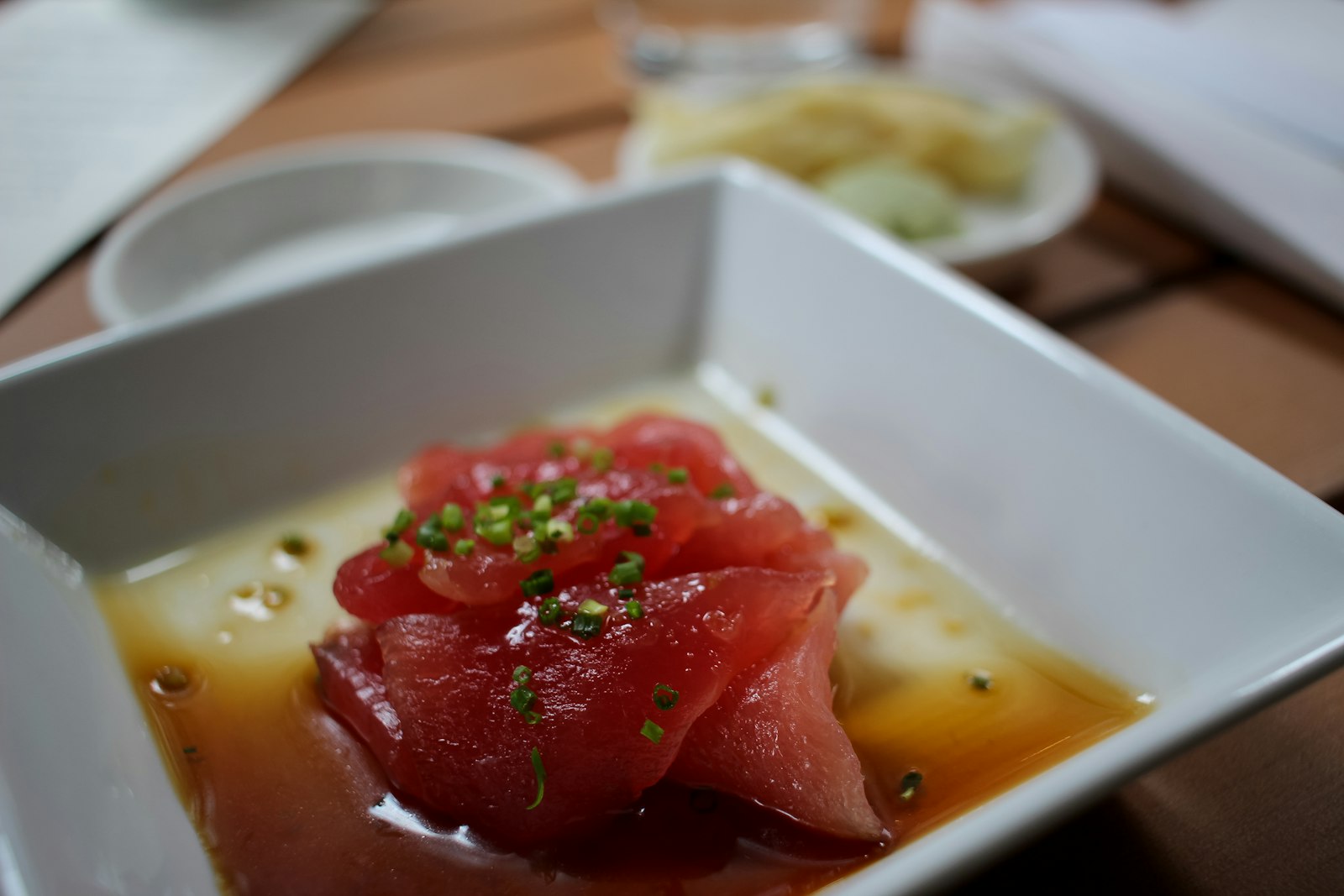
Sashimi — raw fish served without rice — has its own presentation logic. Slices are often arranged in a fan or overlapping cascade, sometimes over crushed ice or a bed of shredded daikon, with a leaf or edible garnish for contrast. Flat plates with a little rim work well, and in a formal kaiseki setting sashimi may be served in a mukōzuke, a deeper small dish set at the far side of the tray.
Because the fish is the whole show, sashimi vessels stay understated: a matte glaze, a dark plate that makes pale fish glow, or a simple celadon. The plate should recede so the food comes forward.
The supporting cast
A complete sushi setting needs a few small pieces. A tiny soy-sauce dish (a kozara or mamezara) gives each diner a shallow pool for dipping — a piece of nigiri is meant to touch the soy fish-side down, so a small, flat dish is ideal. A hashioki (chopstick rest) keeps chopstick tips off the table, and a small mound of pickled ginger and a dab of wasabi round out the plate.
These are exactly the vessels covered in our guide to Japanese small dishes, and a handful of them turns a single sushi plate into a proper place setting.
Materials: what to look for
Porcelain is crisp, non-porous, and easy to clean — the safest all-rounder for raw fish. Stoneware adds warmth and texture and hides wear well. Lacquer (urushi) is lightweight and elegant but needs handwashing and no soaking. Slate and wood boards look striking but are serving pieces rather than everyday plates; wooden geta in particular should be hand-dried and never left wet.
Sushi serving plates and serveware at a glance
| Piece | Japanese | Best for |
|---|---|---|
| Sushi-zara | 寿司皿 | Nigiri and maki; rectangular or oval ceramic |
| Nagazara | 長皿 | Rows of nigiri, sashimi, tempura, skewers |
| Geta board | 下駄 | Raised presentation of sushi, restaurant style |
| Mukōzuke | 向付 | Sashimi in a formal kaiseki setting |
| Soy dish (kozara) | 小皿 | Dipping soy sauce, one per diner |
| Hashioki | 箸置き | Resting chopsticks between bites |
Choosing a sushi plates set for home
For most homes, a practical sushi setting is two nagazara or sushi-zara, two small soy dishes, and two chopstick rests — enough for a dinner for two, easy to scale up. Choose plates in a neutral glaze so they work for more than sushi, and add one statement piece, like a geta board or a dark textured plate, for when you want the meal to feel special.
If you are building a broader table, it is worth reading our guide to Japanese dinnerware sets and our overall Japanese tableware guide, since sushi plates slot neatly into a wider collection.
Buy this, not that
If you buy one piece, make it a ceramic nagazara 27–33 cm long and at least 12 cm wide (roughly $25–60) — it holds five or six pieces with the spacing that makes them look composed, and it works for tempura, skewers and grilled fish on every other night of the year. Add two flat soy dishes about 9 cm across and under 15 mm deep. Don’t make the geta board your first purchase ($20–40): it presents beautifully but holds no more than the plate, and wooden feet mean hand-washing and drying every single time. And be wary of “sushi sets” whose soy dishes are deep little bowls — a piece of nigiri can’t be turned into one without the rice going in after it.
Care
Glazed porcelain and stoneware plates are generally dishwasher-safe, though handwashing preserves any gold or delicate decoration. Wooden geta and lacquer pieces should always be washed by hand, dried promptly, and never left to soak, which prevents warping, cracking, and cloudiness. Slate should be hand-cleaned and occasionally re-oiled to keep its color deep.
Frequently asked questions
What plate is best for serving sushi at home?
A ceramic nagazara (long plate) or a rectangular sushi-zara is the most practical choice. It presents nigiri and rolls cleanly, and it doubles as a plate for appetizers, tempura, or grilled fish on other nights.
Do I need a wooden geta board?
No — a geta is a lovely restaurant-style touch, but a flat ceramic plate serves sushi perfectly well. If you entertain often and want the presentation to feel special, one geta board is a nice addition.
What is the small dish for soy sauce called?
Usually a kozara (small plate) or the even smaller mamezara (bean plate). A shallow, flat dish is ideal because nigiri is meant to be dipped fish-side down with only a light touch of soy.
Are slate and wood plates food-safe for raw fish?
They can be, but treat them as serving pieces rather than everyday plates. Use a food-safe sealed slate, keep wooden boards clean and fully dry between uses, and for frequent raw-fish service a non-porous porcelain plate is the easiest to keep hygienic.
Where to find authentic sushi plates
Specialist Japanese tableware shops carry sushi-zara, nagazara, and geta boards from Japan’s ceramic regions, often with the kiln and glaze named so you know what you are buying. Start with one or two versatile long plates in a neutral glaze, add the small soy dishes and chopstick rests, and build from there as your sushi nights become a habit.
Disclosure: Nagori Ware is an independent editorial guide written from Japan. Some links elsewhere on the site are affiliate links. Parts of this site are drafted with AI assistance and checked against Japanese sources. General information, not legal or safety advice.