Skip to content

Nagori Ware

  • Bowls
  • Tea
  • Tableware
Nagori Ware
  • A pair of handleless Japanese teacups and small plates on an indigo cloth beside a paper-wrapped gift tied with red-and-white cord
    Tableware

    Japanese Tableware & Tea Gifts: What to Give, and Why the Number Matters

    ByMitsuru Kobayashi August 8, 2026August 31, 2026

    Walk into a tableware shop in Japan and count the dishes. Small plates come boxed in fives. Teacups come in pairs. You will look for a long time before you find a set of four, and once you know why, you cannot unsee it: shi (四) is four, and shi (死) is death. That is…

    Read More Japanese Tableware & Tea Gifts: What to Give, and Why the Number MattersContinue

  • Four Japanese vessels with different clay bodies on a wooden table: glossy white porcelain, unglazed red stoneware, a pale crazed glaze and a thick dark glaze
    Tableware

    Japanese Pottery Styles Explained: How to Tell Arita, Mino, Hagi and Bizen Apart

    ByMitsuru Kobayashi August 8, 2026August 24, 2026

    A shop listing says “Mino ware” and stops, as if the name has answered something. It hasn’t. What a regional name actually encodes is two physical facts — what the clay is made of, and how hot it was fired — and those two facts decide almost everything you will care about later: how heavy…

    Read More Japanese Pottery Styles Explained: How to Tell Arita, Mino, Hagi and Bizen ApartContinue

  • A Japanese table set with many small dishes
    Tableware

    Seasonal Japanese Table Setting: A Year at the Table

    ByMitsuru Kobayashi August 7, 2026August 25, 2026

    How the Japanese table changes through the year: spring pastels, summer glass, autumn earth tones, winter warmth — and how to do it with a few pieces.

    Read More Seasonal Japanese Table Setting: A Year at the TableContinue

  • A small blue-and-white Japanese soba choko cup
    Tableware

    Soba Choko: The Most Versatile Cup on the Japanese Table

    ByMitsuru Kobayashi August 7, 2026September 12, 2026

    The soba choko is a small Edo-era cup that does a dozen jobs: dipping sauce, tea, side dishes, dessert. History, size, uses, and how to choose a set.

    Read More Soba Choko: The Most Versatile Cup on the Japanese TableContinue

  • A pair of Japanese chopsticks resting on a plate of food
    Tableware

    Japanese Chopsticks & Hashioki: Lengths, Etiquette, and How to Choose

    ByMitsuru Kobayashi August 7, 2026September 11, 2026

    A practical guide to Japanese chopsticks and the chopstick rest (hashioki): how to size them, the etiquette that matters, materials, care, and what to buy.

    Read More Japanese Chopsticks & Hashioki: Lengths, Etiquette, and How to ChooseContinue

  • A Japanese donburi rice bowl topped with grilled meat
    Bowls

    Ramen Bowl vs Donburi Bowl: Which One Do You Need?

    ByMitsuru Kobayashi August 4, 2026September 9, 2026

    They look similar in a photo, but a ramen bowl and a donburi bowl are built for two different jobs. A ramen bowl is wide and roomy, made to hold a lot of broth with noodles and toppings floating in it. A donburi bowl is deeper and more compact, made to cradle a mound of…

    Read More Ramen Bowl vs Donburi Bowl: Which One Do You Need?Continue

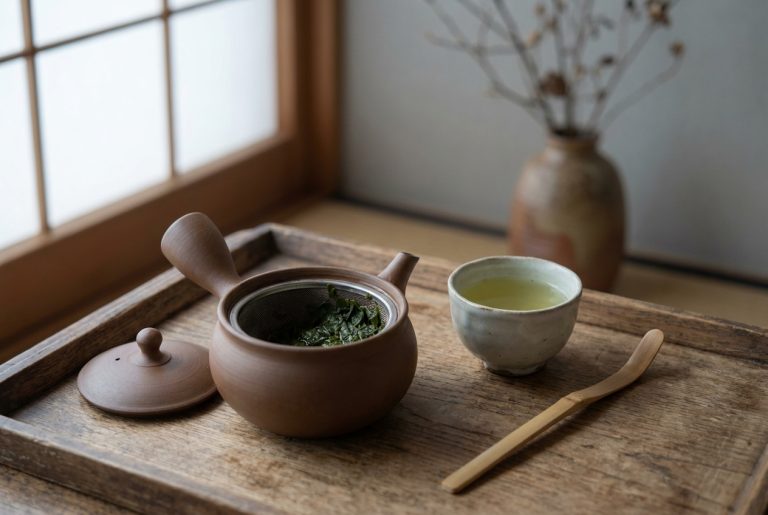
  • A Japanese teapot with two cups of green tea
    Tea

    How to Brew Sencha vs Gyokuro: Temperature, Time & Technique

    ByMitsuru Kobayashi August 4, 2026September 11, 2026

    Sencha and gyokuro come from the same plant, yet they ask to be brewed almost oppositely. The single biggest lever is water temperature: sencha likes a warm 70–80°C, while gyokuro wants a surprisingly cool 50–60°C. Get that one number right and both teas taste sweet and full instead of thin or bitter. Here’s why, and…

    Read More How to Brew Sencha vs Gyokuro: Temperature, Time & TechniqueContinue

  • A hand reaching for a stack of Japanese ceramic bowls
    Tableware

    Are Japanese Bowls Microwave & Dishwasher Safe? A Simple Guide

    ByMitsuru Kobayashi August 3, 2026August 27, 2026

    The short answer: most Japanese porcelain bowls with no metallic decoration are microwave- and dishwasher-safe, while many earthenware and rustic stoneware bowls are not. Any bowl with a gold or silver rim should never go in the microwave, and hand-washing extends the life of almost everything. The rest of this guide shows you how to…

    Read More Are Japanese Bowls Microwave & Dishwasher Safe? A Simple GuideContinue

  • White and blue Japanese ceramic bowls on a wooden table by a window
    Tableware

    How to Care for Japanese Ceramics: Seasoning, Washing, and Everyday Habits

    ByMitsuru Kobayashi August 3, 2026August 26, 2026

    A well-made Japanese bowl is tougher than it looks, but it does keep asking for small attentions. Most of what people call “delicate” about Japanese ceramics is really just unfamiliarity — a handful of habits that are second nature in a Japanese kitchen and easy to miss everywhere else. Learn them once and a good…

    Read More How to Care for Japanese Ceramics: Seasoning, Washing, and Everyday HabitsContinue

  • A red clay Japanese kyusu teapot on a wooden tray with a cup
    Tea

    The Best Japanese Teapots (Kyusu): A Buyer’s Guide

    ByMitsuru Kobayashi August 3, 2026September 11, 2026

    How to choose a Japanese teapot (kyusu): side vs back handle, the strainer that keeps your cup clean, and Tokoname clay vs porcelain — with picks for sencha, gyokuro and everyday green tea.

    Read More The Best Japanese Teapots (Kyusu): A Buyer’s GuideContinue

Page navigation

Previous PagePrevious 1 2 3 4 5 6 Next PageNext
  • Privacy Policy
  • Contact
  • Disclosure
  • About
  • About Nagori Ware — Who Writes This, and How

© 2026 Nagori Ware - WordPress Theme by Kadence WP

  • Bowls
  • Tea
  • Tableware