Gifts for a Japanese Green Tea Lover: Tea or Teaware, by Budget
If you know they already brew loose-leaf green tea every day, give them a piece of teaware they would never buy for themselves: a good kyusu sized to their household, or a proper airtight caddy. If you are not sure what they drink, give tea, in 100 g bags, with one small tool. Tea is the safe gift. Teaware is the memorable one, and it is also the one that can go wrong.
That is the whole decision, and the rest of this page is about making it without the two mistakes I see most often: buying a “Japanese tea set” that turns out to be a Chinese-style set with a pot for one cup, and ordering from Japan in mid-December and paying a customs bill at the door.
How these were chosen. I have not used the specific products below, and I am not going to pretend I have. I picked them by reading the sellers’ own listings (capacity, weight, clay, maker), the buyer reviews on those pages (how many, and what people keep saying), each shop’s shipping and duty pages, and Japanese-language sellers for what a normal teapot size actually is. Prices are what the shops listed on 12 November 2026. They will change, and some items will sell out before December.
Tea or teaware? Decide by what you actually know about them
A tea lover usually has a pot they have used for years. It may be chipped, it may drip, it may be too big for one person. They keep it because replacing a teapot that still works feels like an indulgence. That is exactly why a new one lands well: it is the upgrade they keep postponing. Several Japanese tea shops make the same point in their own gift guides, and it matches what you see in the reviews of well-made pots, where people describe finally replacing something they had put up with.
The catch is that teaware is personal in a way tea is not. Size, handle position and filter type all matter, and you can get them wrong. Tea you can hardly get wrong if you stay with sencha, the everyday leaf in Japan. So the question is not “which is nicer”. It is “how much do I know”.
Under $35: tea, and the tool that keeps it fresh
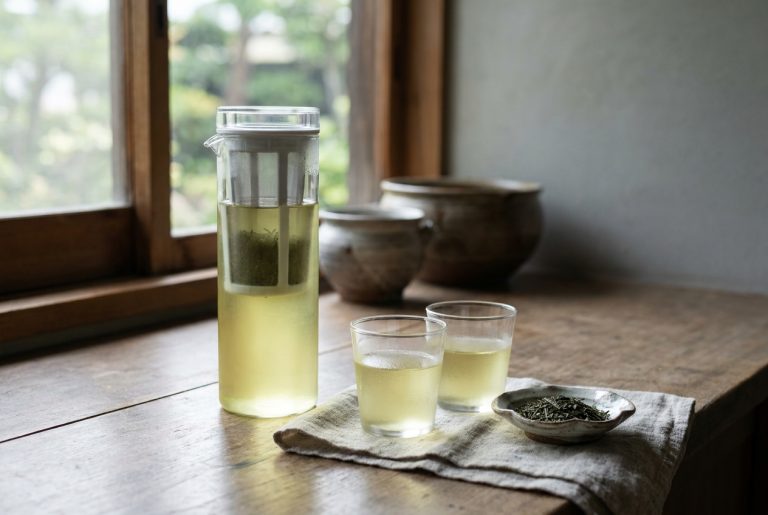
Japanese tea is sold, and given, in 100 g bags. That is roughly a month of daily cups for one person, and it is the amount you want: green tea starts to go flat within weeks of opening, so a bigger tin is not a bigger gift. If you only buy one thing, buy sencha.
- Golden Celebration Gyokuro, 40 g — Hibiki-an, $29. Gyokuro is the shaded, sweet, brothy tea Japanese people bring out for a special occasion. 40 g sounds small, but gyokuro is brewed in small, slow cups at low temperature, so it lasts longer than the weight suggests. Give it to someone who already knows sencha. A beginner may brew it like ordinary green tea, with water that is too hot, and wonder what the fuss was about. Send our sencha and gyokuro brewing guide with it.
- ITO URUSHI airtight containers, pair, 150 g each — Hibiki-an, $21. Steel, with a plastic inner lid, 12.5 cm tall and 7.5 cm across. Seven reviews on the page, all five stars. Not beautiful, but it does the one job that matters: it keeps air and light off the leaf. Paired with a 100 g bag of sencha, it makes a complete small gift. Why the inner lid matters is in how to store green tea.
- MANTEN yuzamashi, 325 ml — Hibiki-an, $24. A small pitcher for cooling boiled water before it goes into the pot, 10 cm wide and 8 cm tall. Five reviews, all five stars, though the text of the reviews is not shown. It suits someone whose sencha tastes bitter and who has never owned a thermometer. Whether they really need one is a fair question, and our yuzamashi guide answers it honestly.
$35–90: a real teapot, or a tea pair
This is where most good gifts sit. Two tea boxes come first, then the teapots.
- Superior Gift Set (Gyokuro and Sencha, 100 g each) — Hibiki-an, $41.50. Wrapped with a mizuhiki cord, and a message card can be added. Three reviews, all five stars, praising the wrapping and the taste. The page does not say where in Japan the leaf was grown; the shop itself is in Ujitawara, in the Uji tea district south of Kyoto. A good choice when the person drinks tea but you do not know their teapot.
- Sugimoto Reserve Gift (Sencha and Gyokuro) — Sugimoto USA, $43.50 on sale (regular $58). Sugimoto is a Shizuoka tea maker (founded 1946) with a US company in Washington State, so this ships from inside the US, with no customs at the door. The listing does not give the weight of each tea, which I would want to know before paying full price.
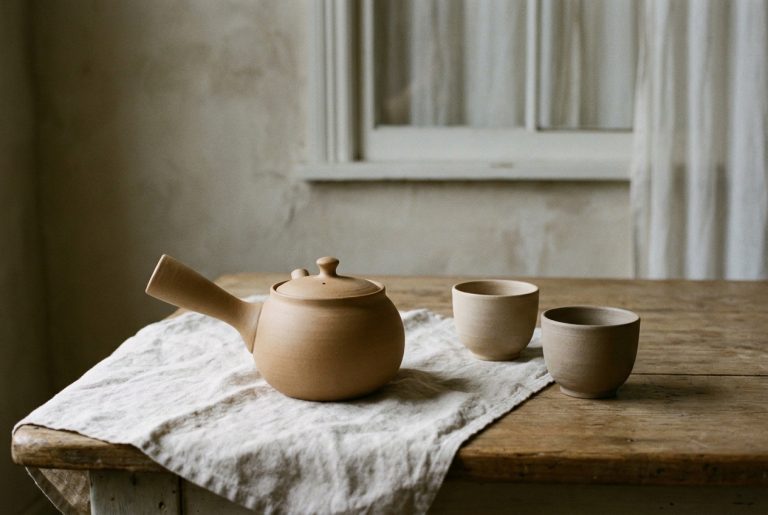
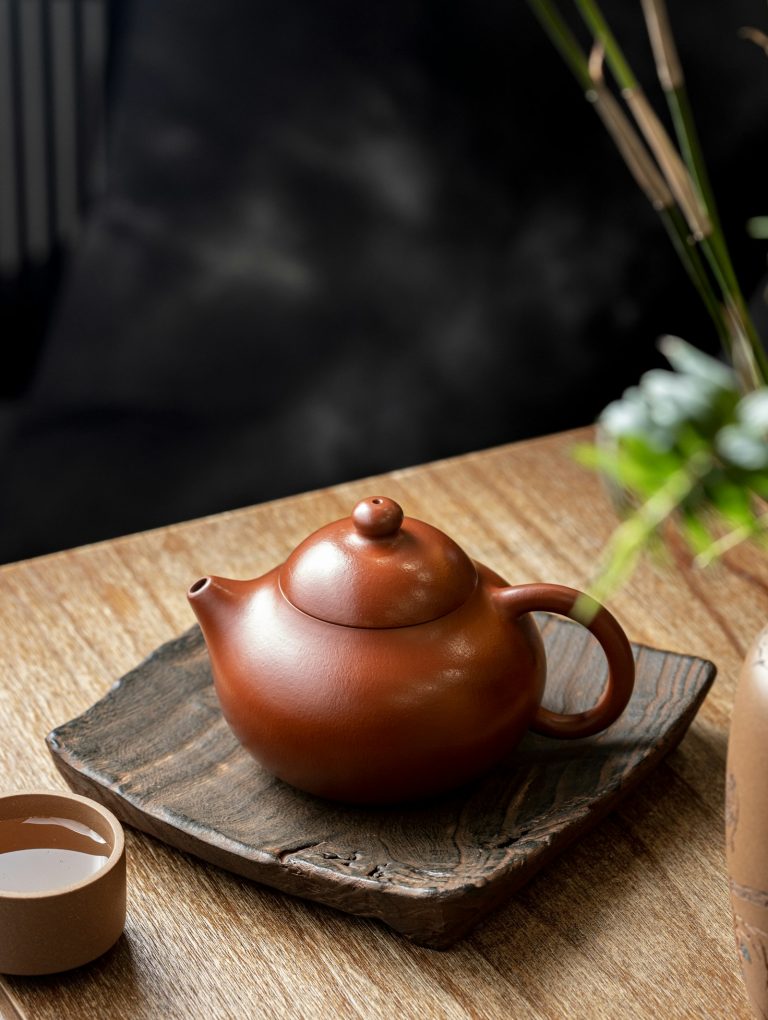
- Tokoname kyusu, 300 ml, Jinsui kiln — Sugimoto USA, $40.50 on sale (regular $54). Unglazed red Tokoname clay from Aichi, the town best known for the side-handle kyusu. The cheapest real kyusu on this list, and it ships domestically. Two things to know. The listing contradicts itself on the filter (ceramic mesh in the title, “fine metal” in the description), so ask before you buy if they drink deep-steamed sencha, which clogs fine filters. And one of the three reviews says it holds less than expected. At 300 ml it is a pot for one generous cup or two small ones.
- MANTEN yunomi, pair, 120 ml each — Hibiki-an, $43. Porcelain, 7.5 cm across and 6 cm tall, listed as lead-free. Eight reviews over twelve years, all five stars. 120 ml is a proper Japanese sencha cup, smaller than the mugs most people expect. If the person drinks big mugs of tea, a taller everyday yunomi of 180 ml or more will get more use.
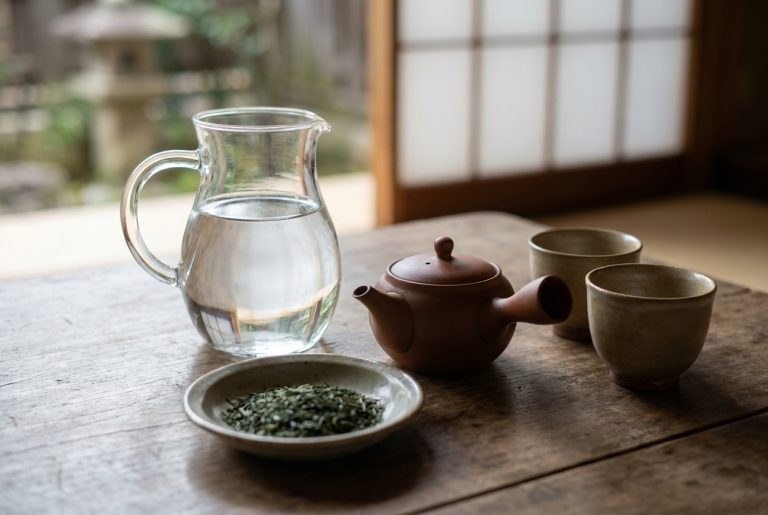
- HOHRYU kyusu, 360 ml, by Futoshi Sawada — Hibiki-an, $75. If I were giving one teapot, it would be this kind of pot. Tokoname clay, a built-in ceramic mesh filter, and a weight of 175 g. The listing says that is about half of a typical pot this size. Thirty-five reviews from 2006 to 2026, all five stars, and two things come up again and again: how light it is in the hand, and that it pours without dripping. 360 ml makes two to three cups, which is the size Japanese sellers describe for two people. The maker is named on the page, which is rarer than it should be at this price.
Buy this, not that
For a daily sencha drinker you know well, buy one named-maker Tokoname kyusu of 300–360 ml, not a boxed “tea set” with a pot and six cups. Pots in those six-cup sets can be sized for one cup, and some are Chinese gongfu sets sold under a Japanese name. If you don’t know their teapot, buy two 100 g teas and a caddy instead.
Ready-wrapped sets, for when you want it to arrive looking like a gift
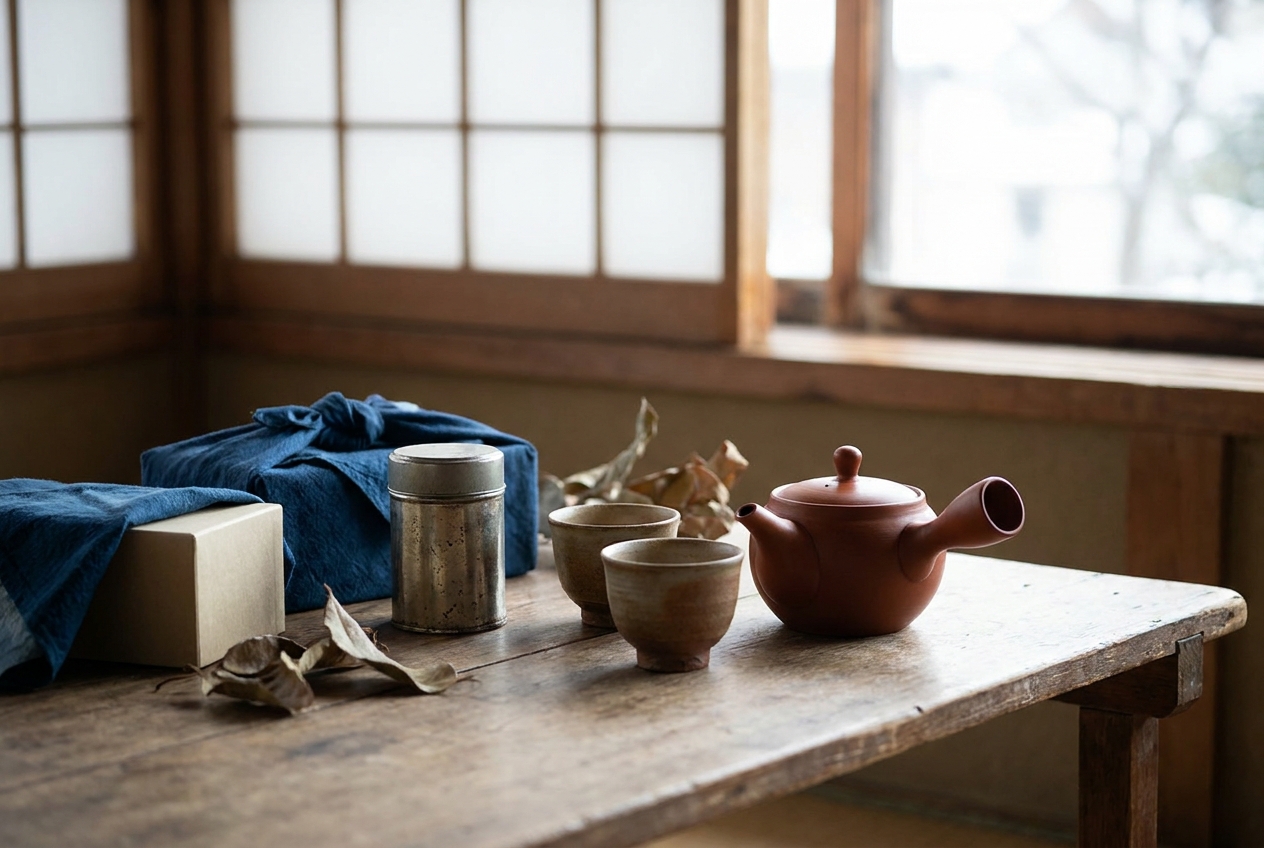
- FUROSHIKI Gift Simple Kyusu Set — Hibiki-an, $83. Sencha Superior 100 g, a kyusu, one yunomi, all tied in a 70 cm cotton furoshiki cloth made in Kyoto. The cloth is reusable as a wrap or a bag. Two gaps in the listing. It does not give the pot’s capacity or maker. And it comes with one cup, which is fine for someone who drinks alone and slightly odd for a couple. No reviews yet. Buy it for the presentation, and add a second cup if it is for two people.
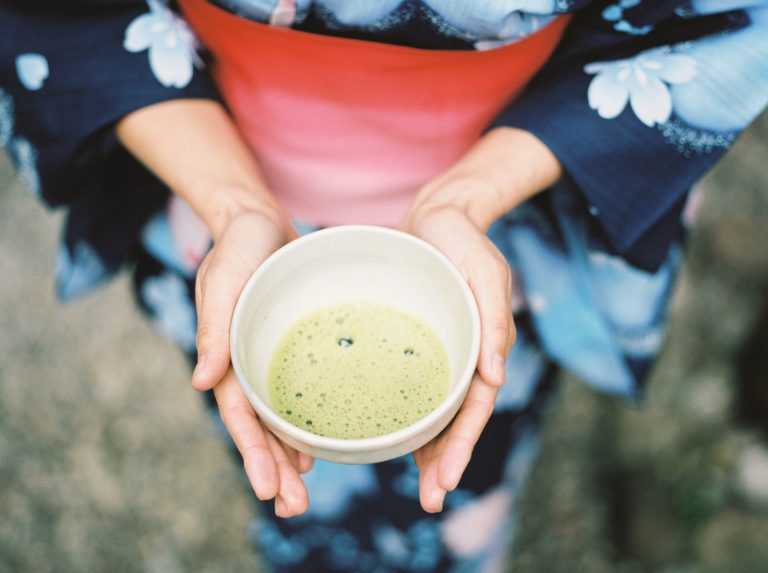
- Starter Set for Matcha Tea Ware — Hibiki-an, $68. A 12 cm bowl, an 80-prong whisk (chasen) and a bamboo scoop (chashaku). No matcha, so add a 20–40 g tin. Five reviews, all five stars. The page does not say where the bowl or whisk was made. That is common, and worth knowing, because many whisks are now made outside Japan. That is not a defect, but it is a fact some buyers care about. What separates a good whisk from a poor one is in our chasen and chashaku guide, and the wider question of whether to buy a set at all is in the beginner matcha set guide.
$200 and up: a Kaikado tea caddy
Kaikado has made hand-formed metal tea caddies (chazutsu) in Kyoto since 1875. The 100 g size is 95 mm tall and 65 mm across, with a double wall and an inner lid, in tinplate, copper or brass. The lid on a good one slides down under its own weight, and that slow fit is the point. Copper and brass darken with handling over years. This is the one item on the page that someone will still use in thirty years.
I could not confirm a current US price from Kaikado’s own shop. A US tea shop listed the 200 g brass size at $235 on sale when I checked, so expect a little over $200 for the smaller sizes and more for copper. Kaikado’s own notice says US buyers pay import duty on delivery. Buy it from a US stockist if you can, or budget for the duty.
Where it ships from changes the price
This is the part most gift guides skip, and in 2026 it is the part that catches people. Hibiki-an, which ships from Kyoto, now sends to the US by DHL only (the shop has stopped using postal shipping to the US). Its own shipping page says green tea comes in duty-free, but teaware is charged a 15% tariff plus an $18.34 DHL handling fee, and the recipient pays at the door. Sometimes there is also a $28 permit fee. Express takes about 4–8 days and standard about 8–16. Sugimoto USA ships from inside the US: $7.95 flat, free over $75, sent within 3 business days and 1–5 days in transit.
Two practical rules follow. First, a surprise duty bill is a bad way for a gift to arrive. If you ship teaware from Japan straight to someone else, either choose the duty-paid option if the shop offers one, or tell them a charge is coming. Second, standard shipping from Japan plus a customs stop can take three weeks in December. Order from Japan by the first week of December, or buy from a US-stocked shop after that.
Three things not to buy
- A “Japanese tea set” with one pot and four or six cups, under $40. A complaint that turns up in Amazon reviews of these sets is the one buyers only notice when they pour: the pot fills one or two cups, not six. Some are Chinese gongfu sets, which are made for many tiny, fast infusions, and the listing title just adds “Japanese”. There is nothing wrong with gongfu tea, but it is not what you meant to buy. How a real Japanese everyday set and a guest set differ is in how to choose a Japanese tea set.
- A side-handle kyusu for a left-hander. A standard kyusu is made to be held in the right hand, and pouring with the left hand sends the spout the wrong way. Left-handed pots exist but are rarely stocked. See the left-handed kyusu guide before you buy, or give a pot with a handle on the back or on top instead.
- A big tin of tea “to last”. 300 g of sencha for one person is three months of a tea that is best within one. Two different 100 g teas make a better gift than one large bag.
If the person is Japanese, or keeps Japanese customs, one note: a box of green tea is the traditional return gift at Japanese funerals, so some families avoid it as a celebration gift. A teapot or cups carry no such meaning. The details, and the rule about sets of four, are in our Japanese tableware and tea gift guide.
Quick answers
Is matcha or sencha the better gift?
Sencha, unless you know they make matcha. Sencha needs only a pot and hot water. Matcha needs a whisk and a bowl, and once opened it fades within a few weeks, so a tin that waits in a cupboard is wasted.
What size kyusu should I give?
Japanese sellers describe about 120–200 ml as a pot for one person and 300–400 ml for two or more. If you are unsure, 300–360 ml is the safest middle: one person can brew a half pot, two can share a full one. The longer answer is in our kyusu buyer’s guide.
Will a clay teapot survive shipping?
None of the reviews I read on the shop pages above mentioned breakage, though most of those products have only a handful of reviews. The lid is the fragile part, and it is the one piece that cannot be replaced from another pot, because each lid is fitted to its own body. Open the box and check the lid on arrival, not on Christmas morning.
The short version
Know their teapot: give them a better one, around 300–360 ml, from a named Tokoname maker. Don’t know their teapot: give two 100 g teas and a caddy. Ordering from Japan: do it by early December, and remember that tea crosses the border free while the teapot does not.
Disclosure: Nagori Ware is an independent editorial guide written from Japan. Some links elsewhere on the site are affiliate links. Parts of this site are drafted with AI assistance and checked against Japanese sources. General information, not legal or safety advice.