The Best Japanese Teapots (Kyusu): A Buyer’s Guide
A Japanese teapot is a small, deliberate object. It is sized for a couple of cups, shaped to pour a clean stream, and — in its most classic form — held by a handle that sticks out to one side, not over the top. Brew Japanese green tea in the right one and the leaves open properly, the pour is bright and clear, and the tea tastes the way it should.
This guide covers what a kyusu is, the handle styles, the all-important strainer, and the clays that shape the flavor — with a shortlist by how you drink.
What is a kyusu?
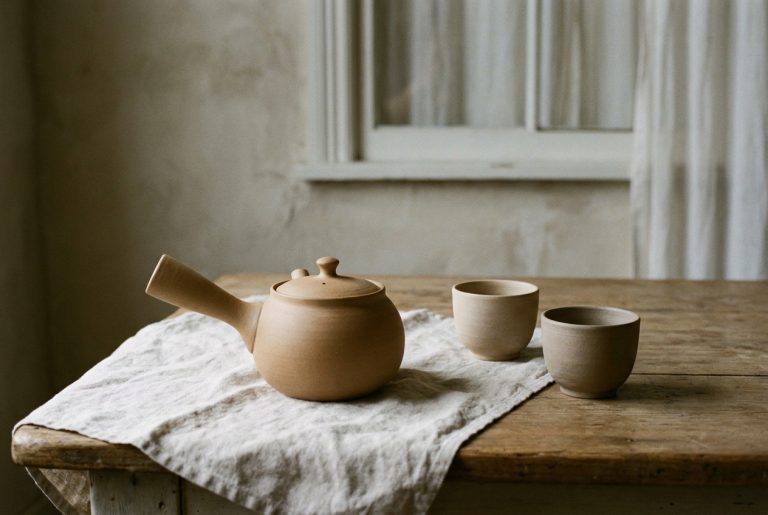
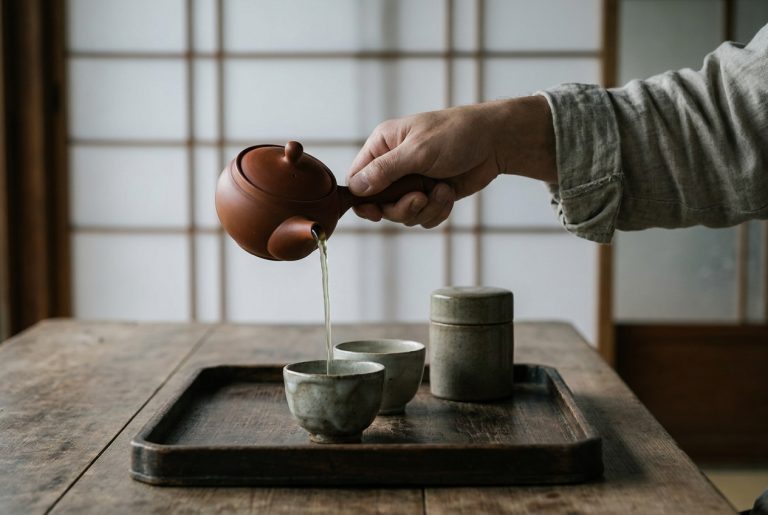
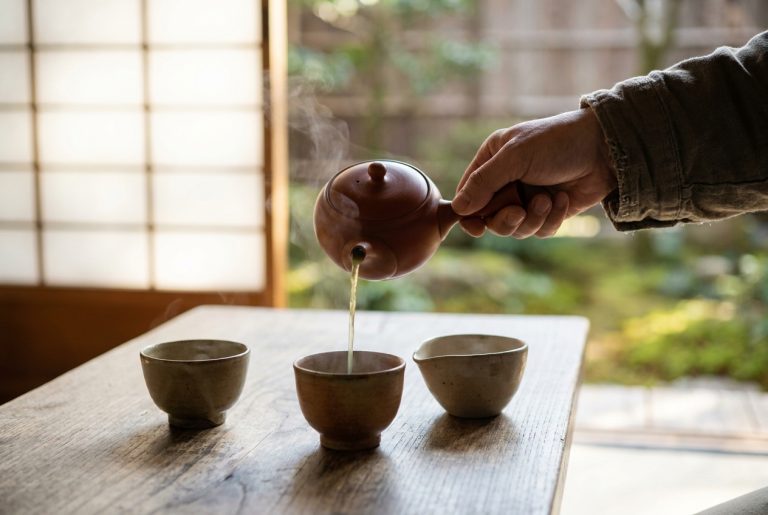
A kyusu (急須) is a Japanese teapot made for green tea — sencha, gyokuro, genmaicha. Most are small, around 200–350 ml, because Japanese green tea is brewed in short, repeated infusions rather than one large pot. The defining feature of the classic kyusu is the side handle, set at a right angle to the spout, which gives precise control when you pour with one hand.
Types of Japanese teapot, sorted by handle
- Side handle (yokode 横手) — the iconic kyusu. A straight handle at 90° to the spout, ideal for controlled single-hand pouring of small servings. The default choice.
- Back handle (ushirode 後手) — a handle opposite the spout, like a Western teapot. Better for larger pots and for serving more people.
- Top handle (uwade 上手) — an arched handle over the top, often for bigger pots or roasted teas like houjicha.
- Handleless (hōhin / shiboridashi) — a small lidded vessel with no handle, for high-grade gyokuro brewed at low temperatures, where the pot never gets too hot to hold.
The side handle is hollow, and that is why you can hold it
The section above says where the handle sits. It does not say what it is made of, and on a yokode kyusu that turns out to matter just as much. The handle is not a rod of clay stuck to the side of the pot. On a properly made one it is a tube — hollow the whole way, with the cavity open at the outer end.
The reason is heat. Clay conducts, and a solid clay bar joined to a pot of 80 °C water would arrive at something close to the temperature of the pot. A tube filled with air does not: the air pocket is a poor conductor, so the outer surface of the handle stays far cooler than the body. That is what makes the one-handed pour possible at all. You are holding the only part of the pot that was designed not to get hot.
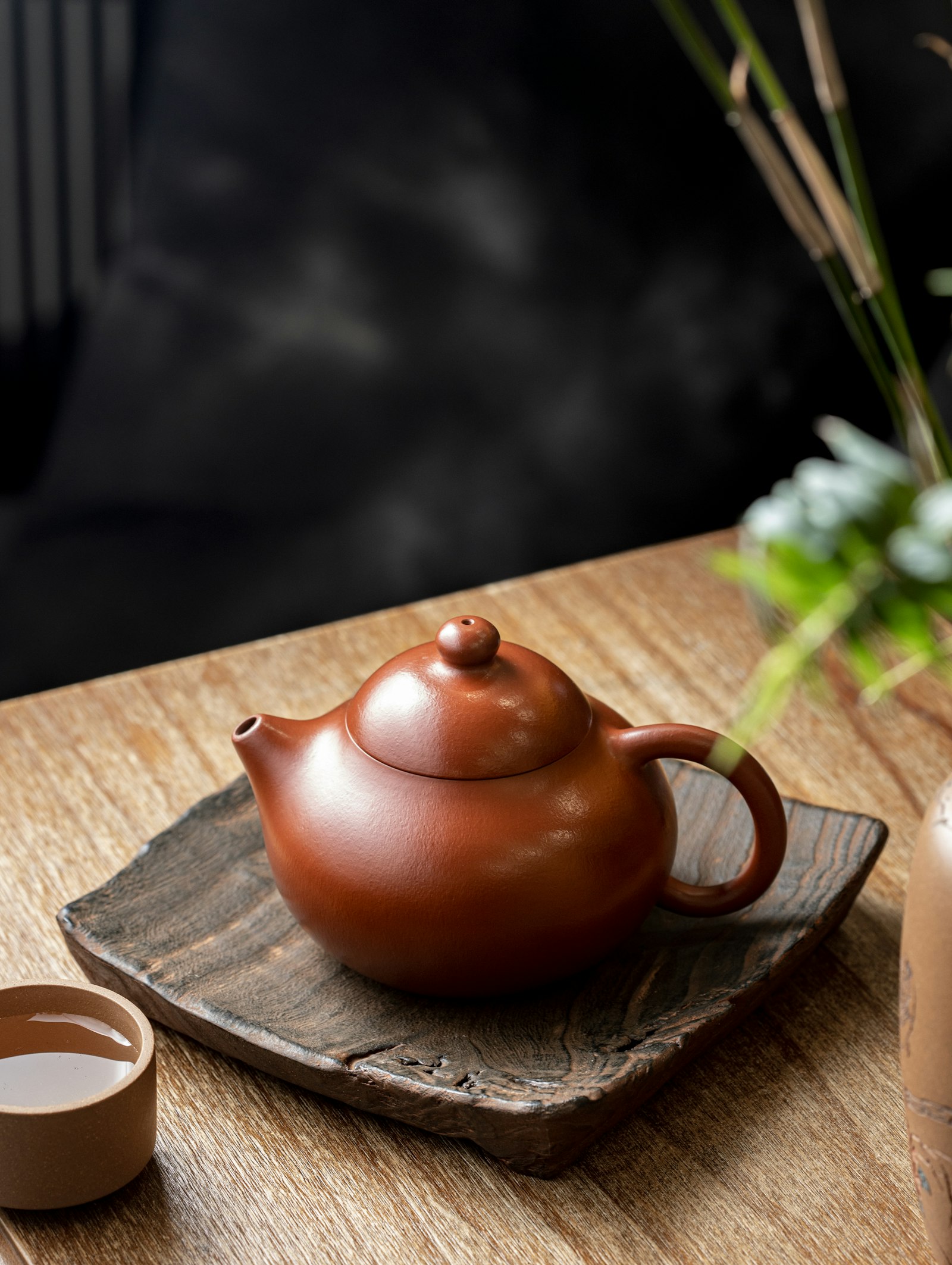
It is also something you can check before buying, which is unusual for a detail this physical. Look at the photograph of the handle end-on. On most Tokoname and Banko pots you will see a dark opening at the tip of the handle, sometimes a neat circle, sometimes an oval. That opening is the giveaway. A handle moulded solid, or one finished flat and closed at the end, is a different proposition — it may be perfectly good, but it will run warmer, and on a small pot filled to the shoulder you will notice.
| Handle | What to expect | Best for |
|---|---|---|
| Hollow clay tube, open at the end | Stays notably cooler than the body; the standard on Tokoname kyusu | Everyday sencha, poured one-handed |
| Solid clay handle | Runs warmer, and more so as the pot gets smaller and fuller | Lower temperatures, or a pot you fill halfway |
| Wood, rattan or bamboo fitting | Coolest of all, and the reason larger pots use it | Bigger pots — see the dobin |
Two honest caveats. The first is that “cooler” is not “cool”: the body, the lid and the knob are all at brewing temperature whatever the handle is doing, and your thumb sits on that knob throughout the pour. The second is that this is one more reason the shape suits the tea it grew up with. At the 50–60 °C of gyokuro, none of it matters and the hōhin dispenses with a handle entirely; at boiling, the pot gets big enough that the handle moves over the top and turns into a dobin’s bail. The hollow side handle is the answer for the middle, which is where sencha lives.
The strainer: the detail that matters most
Japanese green tea leaves are fine and can be small, so the built-in strainer decides how clean your cup is. Look for one of three types: a ceramic mesh integrated into the pot (sasame — small holes, or a fuller ceramesh ceramic net across the whole spout side), or a fine stainless-steel mesh. A generous, fine strainer keeps leaf fragments out and lets the leaves expand freely. Avoid a single large spout hole for fine sencha — it lets sediment through.
Flat-bottom or round: the shape of the kyusu, and what it does to the leaf
Japanese makers sell kyusu in two broad profiles, and shops name them: hira (平, flat or low) and maru (丸, round). It is not decoration. The profile decides how the leaf sits while it brews, and that is the second-biggest thing about a kyusu after the strainer.
A flat kyusu has a wide floor and a low body, so a spoonful of leaf lies across it in something close to a single layer. Sellers who specialise in Japanese green tea describe the result the same way: every leaf meets the water at the same moment, rather than the leaves at the bottom of a heap being soaked while the ones on top are still dry. Nio Teas sells flat kyusu as their own product line and pitches them for high-grade sencha and gyokuro; a Tokoname buying guide describes the hira shape as exposing every leaf simultaneously and the bulbous maru shape as encouraging convection currents instead. Both are describing the same trade in different words.
The flat pot is aimed at a specific way of brewing. Gyokuro and top-grade sencha use a lot of leaf against a small volume of cool water, and in a tall pot that leaf piles up. Spread it out and the extraction evens out. For everyday sencha, genmaicha and hōjicha — more water, less leaf, hotter — that advantage largely disappears, which is why the standard rounded pot remains what most Japanese households actually own.
There is a cost to the flat shape that the sellers do not mention, and it comes straight out of the geometry rather than from any maker’s claim. A kyusu has to be emptied completely, every time. The last drops are the most concentrated — Japanese tea sellers call it the golden drop — and anything you leave behind keeps working on the leaf, so the second infusion turns bitter before you have added fresh water. A low, wide pot holds that final liquid as a shallow puddle spread over a large floor, and clearing it takes a firmer tilt and a moment’s patience. A rounded pot funnels the last of it toward the spout on its own. Neither is a defect; it is simply one more thing the flat pot asks of your wrist in exchange for the even leaf bed.
Two practical notes. A wide, low pot is the more stable of the two on a tray, which matters more than it sounds when you are pouring one-handed from a side handle. And a hōhin — the handleless pot for gyokuro — is essentially the flat idea taken to its conclusion, which is why it turns up in the same conversations.
If you are buying one pot: buy the standard rounded kyusu. It is more forgiving, it drains itself, and it suits the teas you will actually drink most days. Buy the flat one as a second pot, when you have started buying gyokuro or a sencha good enough that you are measuring the leaf.
Buy this, not that
Buy a Tokoname side-handle pot of about 300 ml with a generous built-in strainer — sasame holes or a ceramic mesh across the whole spout side. Don’t buy the pretty pot whose spout is one large hole: fine sencha leaf goes straight through it and you will be drinking sediment. Don’t buy a pot sold with a deep basket or a tea-ball insert either — it pens the leaf in and cancels the one thing a kyusu is for. And don’t start with a flat (hira) pot unless you are already buying gyokuro; for everyday sencha the round one is the easier pot to pour out completely.
Clay vs porcelain: does it change the tea?
Unglazed clay is the traditional choice, and the region matters. Tokoname ware (常滑焼, Aichi) is the most famous kyusu source; its iron-rich red clay (shudei 朱泥) is widely said to soften the tea by interacting with its tannins. Banko ware (萬古焼, Mie) is the other name you will meet, and it is worth knowing what it actually is rather than reading past it. It comes from Yokkaichi, where the trade association counts more than a hundred kilns, and its signature teapot is the shidei (紫泥) kyusu — unglazed like Tokoname’s shudei, but purple-brown rather than red, and usually lighter in the hand than its size suggests. The association makes the same claim for it that Tokoname makes for red clay: that the unglazed body takes up astringency and rounds the cup out with use. Treat both claims the same way — they come from the people who sell the pots, they are widely repeated in Japan, and they are not something a buyer can verify before purchase. What you can verify is the clay body and the weight. The same clay is why Banko is the name on most Japanese clay pots: around 80 % of the donabe made in Japan come from Yokkaichi, from a body that runs 40–50 % petalite. If you have seen “Banko” stamped on a donabe and wondered why a teapot carries it too, that is the connection. Unglazed clay is porous, so it takes on the character of the tea over time — and must be cared for gently.
Porcelain and glazed kyusu (from Arita, Kyoto and elsewhere) are neutral — they do not change the flavor — and are easier to clean, more forgiving, and often dishwasher-safe. Choose clay for a mellower cup and the ritual of seasoning; choose porcelain for neutrality, easy care, and switching between different teas.
Glass kyusu: the third material, and what you give up
Clay and porcelain are the two materials this guide has been comparing, but the shelf has a third now. Glass kyusu have spread because they are cheap, they never hold a smell, and you can watch the leaf open — which is genuinely useful when you are learning how far a deep-steamed sencha has gone. HARIO’s ChaCha Kyusu “Maru” is the one most people meet: heatproof borosilicate, a stainless strainer, and around $21–39 depending on the shop.
Two things to know before you buy one. The first is size. That HARIO holds 700 ml. A kyusu for sencha is 200–350 ml for a reason — you are pouring small volumes over a lot of leaf and emptying the pot each time. A 700 ml glass pot is a Western teapot wearing the word kyusu, and it will brew you a large mug of something flatter than sencha ought to be.
The second is the strainer, and this is the part the glass reviews never raise. Nearly every glass kyusu uses a removable basket sitting in the middle of the pot, because that is what you can build in glass. We argue elsewhere that a basket strainer is the one design to avoid: it holds the leaf in a column instead of letting it spread across the floor of the pot, and it strains the last, strongest drops least well. Glass does not fix that. It just lets you watch it happen.
Buy glass as a second pot, for iced tea, for hojicha, for a table where people want to see the colour. Do not buy it as your only kyusu if sencha is what you drink.
Comparison at a glance
| Pick (by need) | Type / Material | Best for | Care | Typical price* |
|---|---|---|---|---|
| Best all-round kyusu | Tokoname clay, side handle | Everyday sencha | No soap; rinse & dry | $$ |
| Best easy-care option | Porcelain, side handle | Switching teas, neutrality | Dishwasher-friendly | $$ |
| Best for gyokuro | Hōhin / shiboridashi | Low-temp, high-grade tea | Hand-wash | $$$ |
| Best for a group | Back- or top-handle pot | Serving several cups | Varies by material | $$ |
| Best value first pot | Porcelain with fine mesh | Beginners | Easy | $ |
Our picks: the best kyusu teapot for everyday sencha
Where to buy: for authentic, Japan-shipped pieces we point you to specialist shops rather than generic marketplaces. Purchase and payment complete on their site.
1. The classic Tokoname side-handle kyusu. Red shudei clay, a fine ceramic strainer, around 300 ml — the pot most Japanese green-tea drinkers actually use. Buy this first if you drink sencha daily.
2. The easy-care porcelain kyusu. Neutral, glazed, with a fine mesh — no seasoning, simple to clean, and happy switching between sencha, genmaicha and houjicha.
3. The gyokuro hōhin. A small handleless vessel for slow, low-temperature brewing of premium gyokuro, where you want maximum control and minimum tea.
4. The larger back-handle pot. For brewing enough for several cups at once, when a small kyusu is not enough.
5. The value beginner pot. A porcelain kyusu with a good strainer at an easy price — the low-risk way to start.
Caring for your kyusu
- Unglazed clay: never use soap — the porous clay absorbs it. Rinse with warm water, remove leaves, and air-dry with the lid off. It will season and improve with use.
- Porcelain / glazed: wash normally; most are dishwasher-safe, though hand-washing protects fine strainers and painted detail.
- The strainer: rinse it clear of leaf fragments after each use; a soft brush helps with fine ceramic mesh.
- Avoid thermal shock — do not pour boiling water into a cold clay pot straight from a cupboard in winter.
Frequently asked questions
What is the side handle for?
The side handle (yokode) gives precise, one-handed control over a small pour — the way Japanese green tea is served in short infusions. It is the classic kyusu form.
Clay or porcelain kyusu?
Clay (Tokoname shudei) is said to mellow the tea and seasons over time, but needs soap-free care. Porcelain is neutral, easy to clean and better for switching between teas.
What size kyusu should I buy?
For one or two people, 200–350 ml is ideal. Japanese tea is brewed in small, repeated infusions, so a big pot is rarely needed.
Why does my tea have leaf bits in the cup?
Usually a coarse strainer. A fine ceramic or stainless mesh across the spout side keeps fine sencha leaves out of the cup.
About this guide
Nagori Ware is an independent guide to Japanese tableware and tea. We research materials, regions and makers so you can buy once and buy well. We do not sell products; we point you to the specialist shops that make and stock them, and may earn a referral fee if you buy.
Disclosure: Nagori Ware is an independent editorial guide written from Japan. Some links elsewhere on the site are affiliate links. Parts of this site are drafted with AI assistance and checked against Japanese sources. General information, not legal or safety advice.