Kyusu Strainer Types: Which One Survives Deep-Steamed Sencha
Two Japanese tea specialists will tell you opposite things about the same cup of tea. One sells pots with a stainless band wrapped around the inside wall and says on its own page that the design is optimal for deep-steamed and fine-leaf teas. The other sells pots pierced through their own clay and says the ceramic mesh is the one that will not block, and that the metal ones will. Both are describing fukamushi sencha. Both are specialists writing in Japanese about pots made in the same town. Neither of them is lying to you.
They disagree because the question has the wrong noun in it. What stops a strainer blocking is not what it is made of. It is how much of the pot wall it opens up. Once you look at it that way the two claims stop competing and start agreeing — and you can read almost any kyusu listing and work out in about ten seconds whether the pot will survive the tea you actually drink.
What deep steaming actually does to the leaf
Sencha is separated into grades by one step: how long the fresh leaf is steamed before it is rolled and dried. Japanese sellers publish the windows, and they are short. Light-steamed asamushi gets roughly 25–50 seconds. Ordinary futsumushi sencha, the everyday default, gets about 30–60 seconds. Fukamushi gets two to three times that — one to three minutes.
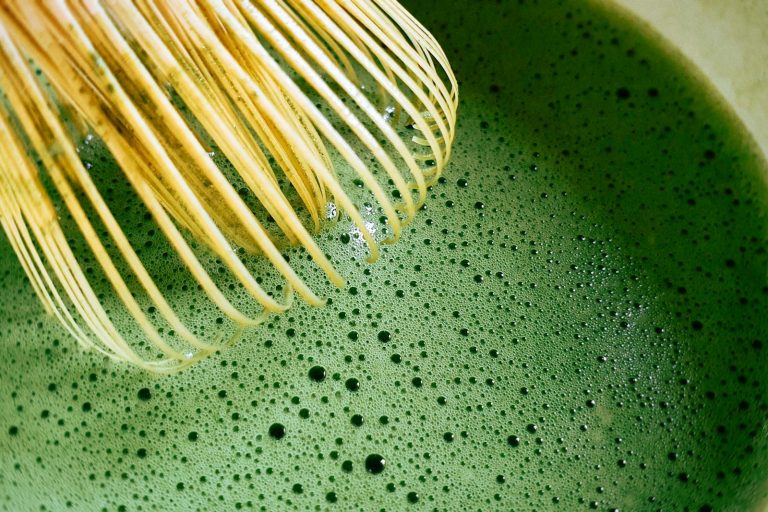
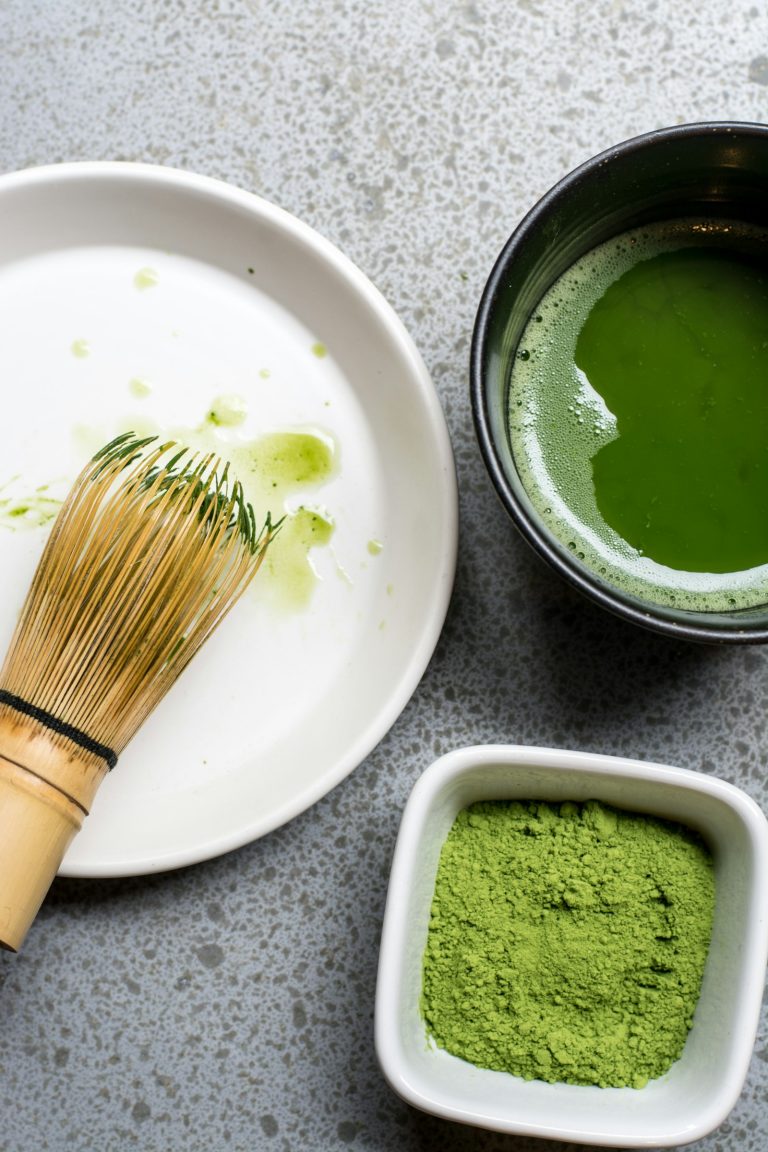
A minute does not sound like much until you know what it does. Steam that long and the structure of the leaf breaks down, so the leaf comes out of the process brittle rather than whole. Roll and dry it and it fractures. What you spoon into the pot is partly leaf and partly powder, and the powder is the point: it gives fukamushi the thick, opaque, dark green cup and the rounder, less astringent taste people buy it for. The cloudiness is the product working, not a fault in your brewing.
It is also the reason this article exists. Brew asamushi and the leaf stays close to needle-shaped, and nearly any strainer will hold it back. Brew fukamushi and you are pouring a suspension of fine solids through a small opening several times a day. That is the stress test, and most pots on sale in English are not sold with it in mind.
The five kyusu strainer types you will actually be offered
Shop listings use these words loosely and often interchangeably, so it is worth pinning them down. In rough order of how much of the wall they open:
- A single spout hole — no strainer at all, just an opening in the clay behind the pouring lip. Common on cheap pots and on some deliberately plain ones.
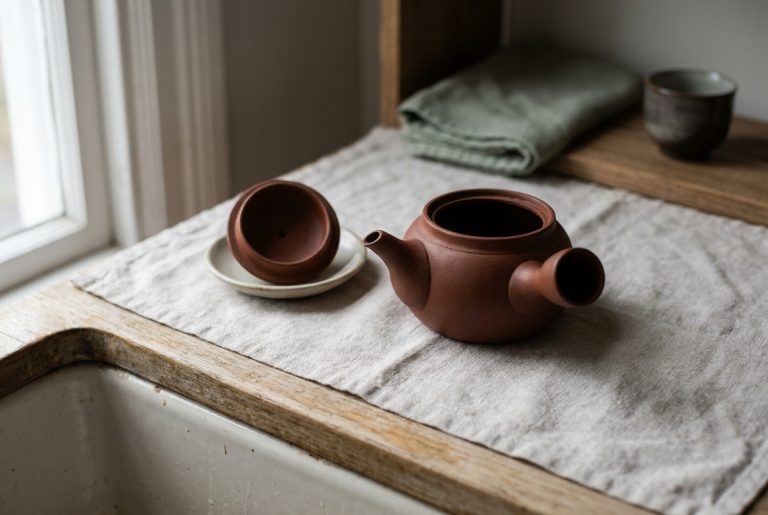
- Sasame (ささめ) — a patch of small holes pierced through the pot’s own clay behind the spout. Ceramic, part of the body, cannot be removed.
- Ceramesh (セラメッシュ) — the same idea taken much further: a dense honeycomb panel of fine ceramic holes covering a broad area of the spout-side wall. Also called a lattice strainer by some makers.
- Obi-ami (帯網), the band strainer — a fine stainless-steel mesh that runs as a band right around the inside of the pot. Sellers describe it as wrapping 360 degrees around the inner wall.
- Kago-ami (カゴ網), the basket — a removable stainless cup that hangs inside the pot and holds the leaf. Convenient, and the one design this guide will tell you not to buy.
Note the second and third: both are ceramic, and the gap between them is enormous. Note the fourth and fifth: both are stainless, and the gap between them is enormous too. That is the first sign that material is not the axis anyone should be arguing about. It is also where a common error creeps into English writing — obi-ami is stainless steel, not a ceramic net, despite the Japanese name sitting next to ceramic terms in the same sentence on a lot of pages.
Why two Japanese shops give you opposite answers
Here is the disagreement in their own terms, because it is worth seeing that both sides are specialists rather than one side being careless.
For steel. A Tokoname kiln that holds a patent on the band strainer writes that spreading stainless mesh around the entire side of the pot lets the water reach all of the leaf, and that the band, flat and bottom mesh types all have openings fine enough to resist clogging — stating outright that this suits deep-steamed and powdered teas. A US retailer selling obi-ami pots says one is “perfect for brewing even the most deeply-steamed fukamushi senchas.” A Japanese tea seller writing in English puts it mechanically: for fukamushi, which breaks into fine fragments during deep steaming, a fine steel mesh is usually the better choice over standard ceramic, because the gaps stop particles without slowing the pour.
For ceramic. A Tokoname pot specialist writes that for deep-steamed tea with fine leaf you should choose a ceramic strainer with fine mesh precisely because it prevents both clogging and leaf escape, and that the metal alternative packs the leaf in so tightly it cannot open properly. Another maker says of its lattice ceramic panel that water and leaf separate, so blocking does not happen.
Read the two paragraphs again and notice what each is actually attacking. The steel camp is not attacking ceramic. It is attacking standard ceramic — the small pierced patch. The ceramic camp is not attacking steel mesh. It is attacking the basket, the little cup that crowds the leaf. Nobody is arguing for the thing the other side is arguing against. Both are arguing against small.
One more thing worth saying plainly, because it changes how you weigh the sentences above: the shop that makes the strongest published case for the band holds the patent on it. That does not make the claim wrong — the reasoning it gives is sound and other sellers repeat it independently — but it does explain why the internet contains two confident, opposite answers. Everyone writing about this sells one of them. No maker publishes clog-rate data, and I have not run a controlled comparison either. What follows is the mechanism the two camps agree on when you strip the branding out.
Area is the variable, not material
A strainer blocks when fine particles arrive faster than the open area can pass water. Deep steaming raises the amount of fine particles arriving; you chose that when you bought the tea, and it is the whole reason the tea tastes as it does. The only side of that equation you can change on a product page is the area.
Both camps’ own reasoning is an area argument once you notice it. The band is recommended because it runs around the whole wall so nothing obstructs the flow. The wide ceramic panel is recommended because it is broad enough that leaf cannot sit across it. The single hole and the small patch are criticised because they are small. The basket is criticised because it is small and because it holds the leaf too tight to expand — which is a second failure worth keeping separate.
That second test matters as much as the first. A pot can pour clear and still make weak tea, if the leaf never gets room to open. Both Japanese sources raise this independently, and it is the reason a basket is a poor choice even for teas that would never clog it. A kyusu is a small pot for short, repeated infusions, and the leaf has to be able to unfurl into the water between them.
So the ranking you want, for fukamushi specifically, runs: band, then wide ceramic panel, then small ceramic patch, then single hole — with the hanging basket off the list on its own merits regardless of what it is made of.
Buy this, not that
If deep-steamed sencha is your daily tea, buy the band. An obi-ami stainless mesh that wraps the inside wall gives you the largest open area sold, and it is the design both camps’ own reasoning points at. Don’t buy a kyusu with a hanging basket strainer at any price — it fails twice, blocking on fine leaf and squeezing the leaf too tight to open. And don’t read “ceramic” as a grade: the word covers both the widest panel on the market and the smallest patch on it, and tells you nothing about the number that decides your cup.
When ceramic is still the right answer
If you do not drink fukamushi, most of the above stops binding. Light and standard-steamed sencha, gyokuro, genmaicha and houjicha all arrive at the strainer as recognisable leaf, and once the particles are large enough that a sasame patch holds them, extra area buys you nothing. At that point choose on the other axes, and ceramic wins several of them.
- Nothing to loosen or lose. A ceramic strainer is the pot. A fitted mesh is a separate component, and separate components come out, deform and get thrown away with the leaves.
- No metal in the cup. Whether you can taste it is arguable and I would not claim you can, but the ceramic camp raises it consistently and it costs nothing to prefer.
- It seasons with the pot. On unglazed Tokoname clay the strainer ages with the body rather than staying visibly new inside an aging pot.
- It is the cheaper failure. Fine mesh can be re-fitted by some makers; a chipped-through ceramic hole cannot be repaired — but mesh is also the part that fails first, and a ceramic panel with no moving parts mostly does not fail at all.
The honest trade-off runs the other way on cleaning, which is covered below, and on price transparency: a broad ceramic panel is expensive to make and priced accordingly. A Tokoname maker’s 270 ml pot with a ceramic lattice strainer lists at around ¥7,370 in Japan, which is real money for a small pot, and you are paying for the panel rather than the decoration.
How to tell from a listing, when the strainer is the thing nobody photographs
This is where the rule from our guide to reading a Japanese tableware listing earns its keep: what a product page declines to show you is information. If a shop does not show the inside of the pot, you cannot judge the area, and the area is the only thing that matters here.
A real example, from a US retailer selling a Tokoname-yaki kyusu: the listing describes a “newly-fitted fine mesh strainer (not pictured).” That parenthesis is the entire problem in two words. It is not dishonest — it is more forthcoming than most — but it means the one specification you need has been declared unavailable.
Sort the wording as you read. Phrases that describe area are the ones worth paying for:
- Tells you something: “wraps around the inside of the pot”, “360”, “band”, “across the whole spout side”, “obi-ami”, “ceramesh”, “lattice”, or a photograph taken looking down into the pot.
- Tells you nothing: “fine mesh strainer”, “with built-in filter”, “stainless steel strainer included”, “traditional ceramic filter”. Every one of these is true of both the best and the worst design in the list above.
- Tells you to walk away: a removable basket shown sitting inside the pot, or no interior view at all on a pot costing more than a token amount.
If you like the pot and the page is silent, ask the shop one question: how much of the inside wall does the strainer cover? Specialist sellers answer that instantly. A dropshipper will not understand the question, which is also an answer. The vocabulary you may need is in our sizes and terms reference, and the wider set-buying decision is in how to choose a Japanese tea set.
Cleaning, which is where a large strainer takes its revenge
Everything above argues for more holes. More holes means more places for fukamushi powder to lodge, and fukamushi powder is the hardest residue of any Japanese tea to rinse out. This is the genuine cost of the design and it is worth accepting knowingly rather than discovering later.
- Rinse while it is still wet. Tip the leaves out and flush the strainer from the inside with hot water straight after brewing. Powder that has dried into a fine ceramic panel is a different job entirely.
- Use a soft brush, from the inside. Pushing outward follows the direction water travels; scrubbing the outside of a spout just packs the holes tighter.
- Never soap on unglazed clay. The body is porous and holds it. This applies to the pot generally, not only the strainer — our guide to caring for Japanese ceramics covers drying and storage properly.
- Dry with the lid off. Standing water sits in holes for the same reason it sits anywhere else.
A steel band has one clear advantage here: it presents a smooth surface a brush can sweep, and some makers will re-fit it. A dense ceramic panel has hundreds of individual holes and no such option. If you are the kind of person who leaves the pot until morning, that is a real argument for the band that has nothing to do with clogging.
Frequently asked questions
Is obi-ami a ceramic net?
No. Obi-ami (帯網) is a fine stainless-steel mesh fitted as a band around the inside wall of the pot. The confusion is common in English writing because the Japanese term appears alongside ceramic strainer names such as sasame and ceramesh, which are ceramic and are pierced through the pot’s own clay.
Will a pot bought for fukamushi still brew ordinary sencha?
Yes. Extra open area never costs you anything on coarser leaf — it is only ever the small strainers that fail in one direction. A band-strainer kyusu is the safe default if you do not yet know which sencha you will settle on, or if more than one person in the house drinks differently.
My fukamushi comes out cloudy. Is the strainer broken?
Almost certainly not. An opaque deep green cup is what deep-steamed tea is supposed to look like; the fine particles in suspension are carrying much of the flavour. A blocked strainer shows up as a slow or stuttering pour, or as whole leaf fragments sitting in the bottom of the cup — not as haze.
Leaf gets past the strainer even with ordinary sencha. Is the pot faulty?
A little fine dust in the cup is normal with any built-in strainer, and with deep-steamed tea it is part of the drink. Whole pieces of leaf are different. Light and standard-steamed sencha reach the strainer as recognisable leaf, and a strainer of any reasonable size should hold it. If pieces still come through, look at what is behind the spout: a single hole or a small patch is the likely reason, not the tea. A band or a wide ceramic panel is the fix, and the list of five types above shows which is which. Pouring through a separate small strainer works in the meantime.
Can I brew fukamushi in a houhin or shiboridashi?
This is the one vessel to avoid for it. As covered in our guide to the handleless houhin and shiboridashi, deep-steamed leaf breaks up and passes straight through a pierced houhin strainer, and a shiboridashi has no strainer at all beyond the gap under its lid. Those pots are built for gyokuro at low temperatures, which is a different problem.
Does a cast iron tetsubin need a strainer?
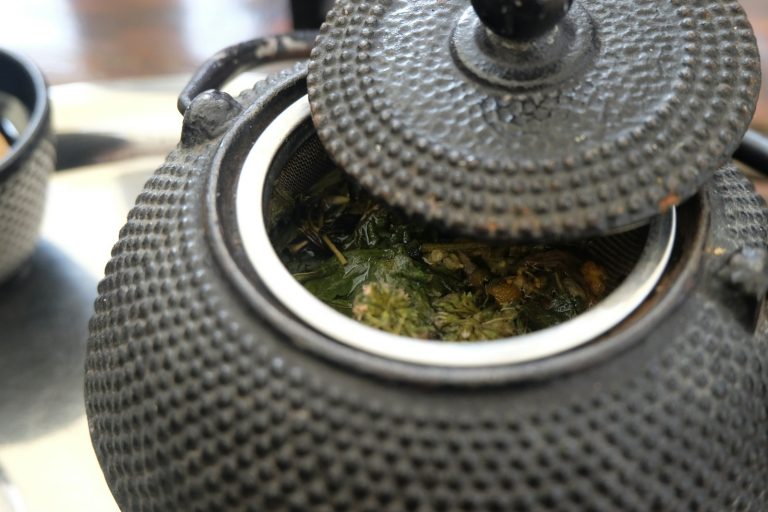
A tetsubin in its traditional form is a kettle for heating water, not a brewing pot, so the question does not arise. Enamel-lined teapots sold as tetsubin usually come with a removable basket — which puts them in the last row of the diagram above, whatever else they do well.
Related guides
- The best Japanese teapots (kyusu) — handles, clays and shapes, and our picks by how you drink
- Houhin and shiboridashi — the handleless pots, and why they are the wrong choice for deep-steamed tea
- How to brew sencha vs gyokuro — temperatures and times for the leaf you are putting in the pot
- Water for Japanese green tea — the variable that changes your cup more than the pot does
- How to store green tea — fukamushi is the tea most punished by careless storage
- Japanese tea: a complete beginner’s guide — where sencha grades sit in the wider picture
- How to care for Japanese ceramics
Disclosure: Nagori Ware is an independent editorial guide written from Japan. Some links elsewhere on the site are affiliate links. Parts of this site are drafted with AI assistance and checked against Japanese sources. Prices quoted are what the sellers listed when this guide was written and will move. General information, not legal or safety advice.