The Best Matcha Sets for Beginners: What to Look For
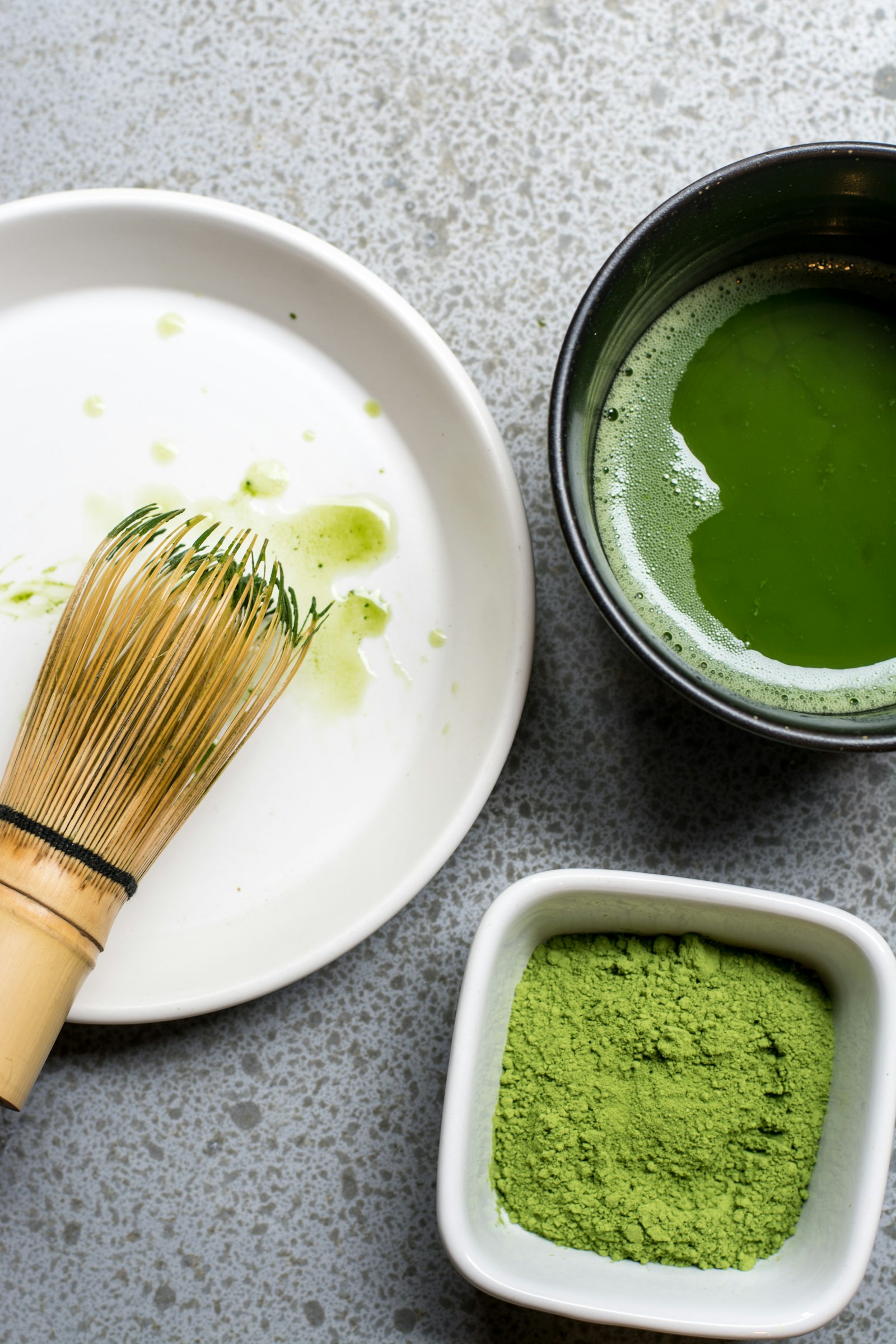
Making matcha at home is a small, repeatable pleasure — measure, sift, whisk, drink — and it takes remarkably little equipment. A matcha set gathers that equipment in one place: a bowl to whisk in, a bamboo whisk to raise the froth, a scoop to measure. Buy a sensible set and you can make a good bowl of tea on your first morning.
This guide explains what belongs in a starter set, what actually matters (the whisk, mostly), and how to keep it all working — with picks for beginners.
What a matcha set includes
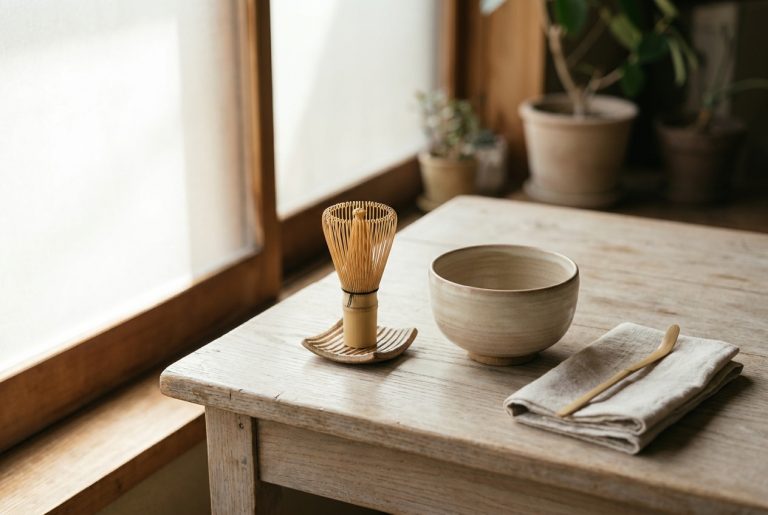
- Chawan (茶碗) — the bowl you whisk and drink from. Wide enough for the whisk to move (see our matcha bowl guide).
- Chasen (茶筅) — the bamboo whisk. The single most important piece.
- Chashaku (茶杓) — the slim bamboo scoop for measuring matcha.
- Kusenaoshi (茶筅直し) — a ceramic whisk rest that reshapes and dries the chasen, prolonging its life. Often included, always worth having.
- A sifter — optional but useful; matcha clumps, and sifting gives a smoother bowl.
The whisk is what matters most
The chasen makes or breaks a bowl of matcha, and prong count is the thing to look at. A fine whisk with around 80–100 prongs (a common beginner count is kazuho, roughly 80) raises the light, even froth of thin tea (usucha) easily. Whisks with fewer, thicker prongs are made for thick tea (koicha) and are harder for a beginner. Start with a fine, higher-prong whisk — it is the most forgiving.
A note on origin: whisks made from Japanese bamboo by makers in Takayama (Nara), the historic home of the chasen, cost more but last longer and whisk better than the cheapest imports. For a beginner, a mid-range Japanese whisk is money well spent.
Do you need matcha included?
Some sets bundle matcha, some do not. If you are buying tea too, look for ceremonial-grade matcha for drinking — culinary grade is meant for baking and lattes and tastes sharper whisked plain. A set with tools plus a small tin of ceremonial matcha is a clean way to start; otherwise buy the powder separately and fresh.
What a matcha set costs, and where the money goes
Sets fall into three bands, and the gaps between them are not about quality of tools. Tools only, no bowl: roughly $25–40. A set including a chawan: roughly $40–80. Artisan or named-maker sets: $150 and up. Look at those bands for a moment and the structure gives itself away — adding a bowl costs about $20–40, and everything above that is the bowl getting better. The bamboo is not what moves the price.
Which produces the single most useful rule in this guide: if you already own a wide bowl, do not buy a set at all. Any vessel around 11–13 cm across and 7–8 cm deep (about 4.5–5 inches wide) gives the whisk room to move, and plenty of cereal and soup bowls qualify — the details are in our guide to matcha bowls. Buy a good Japanese whisk and a rest instead, and put the difference into tea.
The other thing worth understanding before you spend is that a chasen is a consumable, not an heirloom. It is the part of the set that ends: the prongs work loose and eventually snap, and the finer the whisk the sooner it happens. So the honest way to read a set’s price is to ask what you are left holding in two years — the bowl, the scoop and the rest, all of which last indefinitely, plus a whisk you will have replaced at least once. A set that saves money on the whisk has saved you nothing; a set that saves money on the bowl has saved you the expensive part. Prong counts and what they trade are covered in our guide to the chasen and chashaku.
- Under $30 — usually tools only, and usually where the whisk is weakest. Fine if you want to find out whether you will keep drinking matcha before committing.
- $40–80 — the useful band for someone starting from nothing. A bowl you are happy to drink from, a Japanese-bamboo whisk in the 80–100 prong range, a scoop and a rest.
- $150 and up — you are buying a chawan as an object, which is a perfectly good reason to spend, but it is not a beginner decision. Nothing about it will make your tea taste better than the $60 set will.
Buy this, not that
Own a bowl 11–13 cm wide already? Skip the set. Buy a Takayama-made chasen in the 80–100 prong range plus a kusenaoshi rest — the two pieces that decide whether your matcha foams and whether the whisk survives — and use the bowl in your cupboard. Starting from nothing, buy in the $40–80 band and do not stretch to a $150 set: the extra money is all chawan, and it will not change how the tea tastes.
Comparison at a glance
| Pick (by need) | What is included | Best for | Care | Typical price* |
|---|---|---|---|---|
| Best complete beginner set | Bowl, whisk, scoop, rest | Starting from zero | Hand-wash; reshape whisk | $$ |
| Best whisk-first set | Fine 80–100 prong chasen + rest | Already have a bowl | Rinse, air-dry, reshape | $$ |
| Best set with matcha | Tools + ceremonial matcha | One-box gift or start | Keep matcha cool, sealed | $$$ |
| Best value tools-only | Whisk + scoop | Adding to a bowl you own | Hand-wash | $ |
| Best gift set | Bowl, whisk, scoop, rest, tin | A considered present | Hand-wash | $$$ |
Our picks
Where to buy: for authentic, Japan-shipped pieces we point you to specialist shops rather than generic marketplaces. Purchase and payment complete on their site.
1. The complete beginner set. Bowl, fine whisk, bamboo scoop and a ceramic whisk rest — everything you need to make tea today, and to keep the whisk alive.
2. The whisk-first set. A quality Japanese chasen (around 80–100 prongs) with a rest, for anyone who already owns a bowl. The upgrade that improves every bowl of tea.
3. The set with matcha. Tools plus a small tin of ceremonial-grade matcha — the simplest single-box start or gift.
4. The value tools-only kit. Whisk and scoop to pair with a bowl you already have. The economical route in.
5. The gift set. A considered box — bowl, whisk, scoop, rest and matcha — for someone beginning their own tea habit.
Caring for your set (especially the whisk)
- Never use soap on the chasen. Rinse it in warm water before and after use, whisking gently in clean water to release matcha.
- Reshape and dry on a kusenaoshi. Setting the wet whisk on the ceramic rest keeps the prongs splayed and lets it air-dry prongs-up, which prevents mold and breakage.
- Treat the whisk as a consumable. Even well cared for, prongs eventually break; replace the chasen when it thins out.
- Hand-wash the bowl and scoop; bamboo should never go in a dishwasher.
Frequently asked questions
What comes in a matcha set?
Usually a bowl (chawan), a bamboo whisk (chasen) and a scoop (chashaku), often with a ceramic whisk rest and sometimes matcha. The whisk is the most important piece.
How many prongs should a beginner whisk have?
A fine whisk of about 80–100 prongs makes light froth for thin matcha and is the most forgiving to learn with.
Do I need ceremonial-grade matcha?
For drinking plain, yes — ceremonial grade tastes smoother whisked. Culinary grade is better kept for lattes and baking.
How do I clean the whisk?
Rinse in warm water only, never soap, then reshape and air-dry on a whisk rest. Replace it when the prongs wear out.
About this guide
Nagori Ware is an independent guide to Japanese tableware and tea. We research materials, regions and makers so you can buy once and buy well. We do not sell products; we point you to the specialist shops that make and stock them, and may earn a referral fee if you buy.
What about an electric frother instead of the whisk?
Every list of starter sets now has at least one kit built around a battery frother rather than a chasen, usually cheaper, and the question deserves a straight answer rather than a defence of tradition. The frother works. If you drink matcha as an iced latte with oat milk, it works well enough that you are unlikely to notice what you gave up, and it does not break every eight months the way bamboo does.
What you give up is the texture of the foam. The two tools move the liquid in completely different ways: a frother spins a small disc at speed in one spot, while a chasen folds air in across the whole surface with sixty to a hundred flexible tines. The pages that compare them quote bubble diameters — roughly 0.1–0.3 mm from bamboo against 0.5–1.2 mm from a frother — and say the frother’s head collapses within a few minutes while a whisked bowl holds for closer to ten.
Treat those numbers as claims rather than findings, because of who is making them: essentially every page running this comparison sells one of the two tools. The direction is consistent across all of them and matches what you can see in your own bowl within thirty seconds, which is worth something. The precise figures are not independently established, and nobody has published a test that was not attached to a shop.
Our line: buy the frother if you are making lattes, and buy the chasen if you drink usucha plain, because the thin bowl of plain matcha is the only case where the foam is most of the drink. One thing neither tool fixes is clumping — that is the powder absorbing moisture, and the answer is a sifter and fresh matcha, not more speed.
Disclosure: Nagori Ware is an independent editorial guide written from Japan. Some links elsewhere on the site are affiliate links. Parts of this site are drafted with AI assistance and checked against Japanese sources. General information, not legal or safety advice.