Gifts for a Matcha Lover Who Already Has the Kit: What Runs Out, by Budget
If they already make matcha, do not buy them another matcha set. Buy the two things every matcha drinker runs out of: fresh matcha in a 20–40 g tin, and a new bamboo whisk. Add a ceramic whisk rest if they don’t have one. Spend more only if you want to give the one thing they will keep for life, which is a better bowl.
Almost every “gifts for matcha lovers” list is written by a shop, and almost every one leads with a starter kit. That is a fine gift for someone who has never whisked a bowl. For someone who whisks one every morning, it is a second bowl, a second scoop and a second whisk they did not need, in a box that takes up a shelf. The useful question is not “what is matcha-themed”. It is “what in their kit is wearing out right now”.
How these were chosen. I have not used the specific products below, and I won’t pretend I have. I chose them from the sellers’ own listings (size, prong count, maker, where it ships from), the reviews shown on those pages (how many, and how they rate), each shop’s shipping and duty pages, and the Japanese-language help pages of a Kyoto tea house for how long matcha and whisks actually last. Prices are what the shops listed on 13 November 2026. They will change, and some of these will sell out before December.
What a matcha drinker uses up, and how fast
A matcha kit is four or five objects, and they wear out on completely different clocks. That is the whole logic of this page.
The matcha itself goes first. Ippodo, the Kyoto tea house, says on its Japanese help page that an opened bag should be drunk within about three weeks, kept sealed at room temperature; its English site says about a month. A normal bowl of thin tea (usucha) takes about 2 g. So a 40 g tin, at one bowl a day, is twenty days. That is not a coincidence. It is why Japanese shops sell matcha in 20 g and 40 g tins and almost never in a kilo bag, and it is why a big tin is not a big gift.
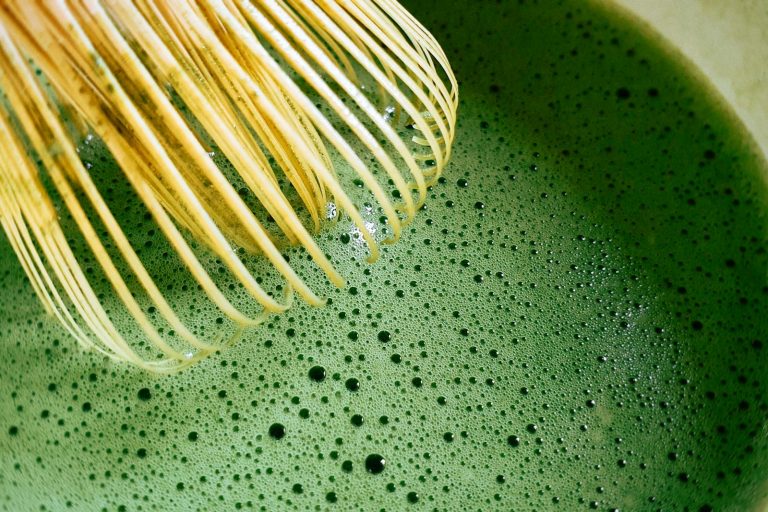
The whisk goes next. Ippodo’s Japanese page calls the bamboo whisk (chasen) something that wears with every use, and gives a rule of thumb: replace it when broken tips start to show and whisking gets harder, or at about 100 bowls. At one bowl a day, that is a new whisk every three months or so. Most people keep using theirs long after that, with a few prongs snapped and the rest splayed outwards, because buying a new one feels like a small extravagance. That is the gift.
The bowl, the scoop and the caddy last for years. These are the upgrades, not the replacements, and they are where taste comes in. They are also where a gift can go wrong.
Under $35: the things they are running low on
If you don’t know their kit well, stay here. Nothing in this tier has a size or a style to get wrong.
- Ikuyo matcha, 20 g box — Ippodo Tea USA, $17; Tsukikage, 20 g box, $28. Ten bowls, which sounds stingy until you remember the three-week clock above: ten fresh bowls beat forty stale ones. Ippodo ships all US orders from a US warehouse, so there is no customs bill at the door. One catch on its free shipping: the $39 threshold counts tea, but not utensils.
- Bamboo whisk, 80 prongs — Hibiki-an, $31.50 (100 prongs, $35.50). The plain replacement. The page does not name the maker or say where it was made, so treat this as the practical choice rather than the crafted one; if origin matters to you, see the Takayama whisk in the next tier. Why 80 prongs and not 120 is explained in our chasen and chashaku guide.
- Whisk keeper (kusenaoshi) — Hibiki-an, $14.50. A small ceramic stand the wet whisk sits on, so the prongs dry in their curve instead of flattening in a drawer. Lead-free ceramic, made in Japan; the ten reviews visible on the page are all five stars. Glazed versions cost $23–25. If they own a whisk but no whisk rest, this is the most useful $15 you can spend on them, and the best pairing for a new whisk.
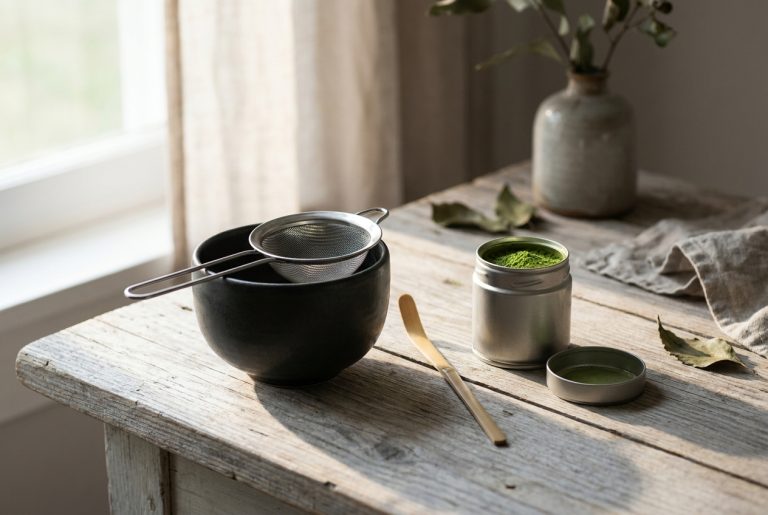
- Matcha sifter — Hibiki-an, $20. 7.5 cm across, 8.2 cm tall, made in Japan. Of the ten reviews shown, eight are five stars and two are four. The page says not to wash it, because it can rust, which is worth passing on with the gift. Whether a sifter is worth owning at all is a fair question; we answer it here, and the short version is yes, if their bowls come out lumpy.
Buy this, not that
For someone who already makes matcha: a 20–40 g tin of matcha, a new whisk and a $15 whisk rest, about $60–80 together. Not another starter set, and not a 100 g or larger bag of matcha “to last”, which at 2 g a bowl outlives its freshness by months.
$35–80: better matcha, or a whisk with a name on it
This is where most good gifts for a regular drinker sit. Pick one line, not one of everything.
- Sayaka matcha, 40 g can — Ippodo Tea USA, $50. Twenty bowls, from a Kyoto house that has sold tea since long before matcha was a café drink, shipped from inside the US. The safe “better matcha” gift.
- Kuradashi Matcha Pinnacle, 30 g — Hibiki-an, $45. Kuradashi means “taken out of the storehouse”: leaf from the Ogura area of Uji, Asahi cultivar, aged about a year and a half before grinding. Limited to 850 packages. Twenty-five reviews, and the ten shown are all five stars. A gift for someone who already knows what they like and would enjoy something they cannot get at the supermarket. It ships from Kyoto, but tea crosses the US border duty-free (see the shipping note below).
- Shirotake chasen, 80 prongs, Urasenke style — Sugimoto America, $58. Made by Komakichi Kubo’s family in Takayama, Nara, the village that makes most of Japan’s tea whisks. One review on the page, so you are buying the maker, not the crowd. This is the whisk to give if the point is the craft rather than the price; our chasen guide explains why a Takayama whisk costs what it does.
- Natsume, Senmen Ryusui — Hibiki-an, $53. A lacquered caddy, 7 × 7 cm, Yamanaka lacquer over a wood composite, not solid wood. A natsume holds about a week of sifted matcha beside the bowl, refilled from the sealed tin. Our natsume guide explains the sizes and how much each one holds. It is a gift for someone who enjoys the ritual, not a practical necessity.
- Chawan, Kibuchi Oribe — Hibiki-an, $67. 12 cm across and 7.8 cm tall, made by Jyunji Hayashi at Rinzan kiln, a Kyoto (Kyo-yaki) workshop. No reviews yet. The size is the standard one: Japanese potters and tea farms describe a matcha bowl as about 12 cm across and 7–8 cm tall, and this one is exactly that.
$80 and up: the bowl they will keep
A bowl is the one gift in this guide that lasts. It is also the one that is most personal, so only go here if you have seen what they drink from and can tell whether they like dark, rough bowls or pale, smooth ones.
- Kuro raku chawan — Hibiki-an, $113. Black raku, 12 cm across and 9 cm tall, from the Shohraku kiln in Kyoto. Twenty-three reviews, and the ten shown are all five stars. Raku is the classic tea-ceremony bowl: hand-shaped and low-fired. It is also porous, so it asks more of its owner: wash it by hand, dry it fully, never the dishwasher, and expect the surface to change with use. Give it to someone who will enjoy that, not to someone who wants a bowl to put in the sink. Our chawan guide compares raku with the easier Mino and Seto bowls.
- Ummon matcha, 40 g can — Ippodo Tea USA, $82. If you would rather give the tea than the bowl: one of Ippodo’s higher grades of thin-tea matcha, about twenty bowls. A consumable at this price feels extravagant, which is exactly what makes it a gift. The person will not buy it for themselves.
Two combinations that work as a single present: the Takayama whisk with the $14.50 whisk keeper (about $73), or a 40 g can of Sayaka with the whisk keeper and a plain whisk (about $96). Both replace what they are running out of and add one thing they probably do not have.
The shipping note that decides which shop
Hibiki-an, in Uji, states the rule clearly on its shipping page: green tea enters the US duty-free, but teaware is charged a duty of 15% or more, plus an $18.34 DHL handling fee, and none of that is included in the order total. The shop has stopped using postal shipping to the US, so it goes by DHL. Express shipping is free from $150, Standard from $50, and the shop gives no holiday cut-off date beyond advising you to order early and choose Express for gifts.
So the practical rule is: tea from Japan is fine; teaware from Japan should be shipped to you, not to them. A gift that arrives with a duty bill attached is a worse gift than a cheaper one that doesn’t. If you want everything to land on their doorstep with nothing to pay, buy from the US-based shops (Ippodo Tea USA, Sugimoto America).
What not to buy a regular matcha drinker
- Another starter set. They have the bowl and the scoop. If the set is the only way to get a good whisk, buy the whisk alone. Our matcha set guide is for the friend who has never made a bowl.
- A large bag of matcha. 100 g is fifty bowls, about seven weeks of daily drinking for a tea that is best within three or four. Two different 20 g tins make a better gift than one big bag. How to keep it is in how to store green tea.
- A 120-prong whisk “because more is better”. High prong counts are for a lighter, finer foam and wear out faster; for daily thin tea, 80–100 is the normal choice.
- A whisk with no rest. A whisk left to dry on its side, or in a drawer, loses the curve of its prongs. If they don’t own a kusenaoshi, give one with the whisk.
For a person who drinks leaf tea rather than matcha, the logic is different (it is usually the teapot they are putting up with); that is in our green tea gift guide. For gift customs, including why Japanese givers avoid sets of four, see our Japanese tableware and tea gift guide. And if you want the bowl to come with something to eat, the folded paper that sweets are served on is explained in our kaishi guide.
Quick answers
How do I know if their whisk needs replacing?
Look at the tips. Ippodo’s rule is broken tips that start to show, or whisking that gets harder, or about 100 bowls. A crack running up the handle, on the other hand, is normal and does not mean the whisk is finished. If you can’t look, assume it needs replacing: a daily drinker almost always has an old whisk.
Should I buy the matcha early?
Unopened, yes; it keeps far longer sealed than open. Ippodo suggests freezing unopened matcha for long storage and letting it come to room temperature before opening, so the powder doesn’t pick up moisture. Tell them that when you give it, and tell them to open it when they will start drinking it, not on the day they unwrap it.
What size matcha bowl is normal?
About 12 cm across and 7–8 cm tall, which is how Japanese potters and tea farms describe a standard bowl. Too narrow and there is no room to move the whisk. If you are guessing, 12 cm is the safe size.
The short version
They already have the kit, so give what wears out: a 20–40 g tin of matcha and a new whisk on a $15 whisk rest. Spend more on a Takayama whisk or on better matcha, not on a set. Buy a bowl only if you have seen theirs. Order tea from anywhere, but have teaware from Japan shipped to yourself, or buy it from a US-based shop.
Disclosure: Nagori Ware is an independent editorial guide written from Japan. Some links elsewhere on the site are affiliate links. Parts of this site are drafted with AI assistance and checked against Japanese sources. General information, not legal or safety advice.