Cold Brew Japanese Green Tea (Mizudashi): How Many Grams for Your Bottle, and How Long
For a first batch of cold-brewed Japanese green tea, use 10 grams of sencha per litre of cold water and leave it in the fridge overnight, about eight hours. Then take the leaves out. If you want it ready sooner, use more leaf, not colder or warmer water: about 15 g per litre is ready in three to six hours, and 20–25 g per litre is ready in one to two. That’s all there is to it. Everything below explains why the recipes you have found disagree with each other, and what changes when your bottle is 750 ml rather than a litre.
In Japan this is called mizudashi, “water-drawn” tea, and in summer it is as ordinary as a jug of barley tea in the fridge door. It’s also an easy thing to get wrong. One shop says 5 grams for half a litre, another says 15–20 grams for a 750 ml bottle. One says thirty minutes, another says overnight, and one blog says the finished tea keeps for two weeks. A reviewer of a cheap bulk sencha wrote that it “requires three times the usual amount of tea leaves” and that, brewed stronger, it turned bitter. The figures only look contradictory because each source is quietly making a different trade between leaf and time.
Why the recipes disagree: leaf and time are one dial
Cold water pulls flavour out of tea slowly. The compounds that make green tea taste sweet and brothy, the amino acids, dissolve well even in cold water. The ones that make it bitter and astringent, catechins and caffeine, dissolve poorly below room temperature. That is why cold-brewed sencha tastes rounder and softer than the same leaf brewed hot, and why reviewers keep saying it is “never bitter”.
Slow extraction means you can reach the same strength two ways: a little leaf for a long time, or a lot of leaf for a short time. Put the published recipes side by side and they fall on that line:
| Source | Leaf and water | Grams per litre | Time in the fridge |
|---|---|---|---|
| Hojicha cold brew (Just One Cookbook) | 10 g in 1 L | 10 | 6–8 hours |
| Chiran tea shop YOGŪ (sencha) | 5 g in 500 ml | 10 | 30 min – 2 hours |
| Musubi Kiln journal | 2½–5 tsp in 2 cups (≈470 ml) | about 12–30* | 3–6 hours (less leaf if overnight) |
| My Japanese Green Tea (fukamushi sencha) | 4 g in 240 ml | about 17 | 8 hours or more |
| Retailers selling the Hario 750 ml bottle | 15–20 g in 750 ml | 20–27 | 1–2 hours |
Read the table from top to bottom and the pattern is plain: the recipes that use the most leaf are the ones that tell you to stop after an hour or two. The one exception is the Chiran shop’s short steep at 10 g per litre. Much of the tea grown around Chiran in Kagoshima is deep-steamed, and deep-steamed leaf is broken into fine particles that give up their flavour much faster. That is our likely explanation for the short time; the shop doesn’t say. Which brings us to the first thing worth knowing about your own tea.
If you only remember one thing from the chart, make it this. When the tea comes out weak, don’t leave it in longer; next time put more leaf in. Long steeps at a low dose taste thin and slowly turn flat and grassy. The “three times the usual amount” reviewer was right to add leaf. Where they went wrong was brewing that bigger dose for as long as before, and that’s when the bitterness showed up.
Which Japanese teas are worth cold brewing?
Almost any of them, but they don’t behave the same way, and one popular choice is better hot.
| Tea | What cold water does to it | Start here |
|---|---|---|
| Sencha (regular steam) | Sweet, clear, pale gold-green. The safest first try. | 10 g/L overnight |
| Fukamushi (deep-steamed) sencha | Brews fast and cloudy; fine particles slip through mesh. | 10 g/L, taste at 2 hours |
| Gyokuro | Cold water suits its umami; the cost of the leaf suits a small batch. | Small kyusu or glass, not a litre jug |
| Hojicha (roasted) | Toasty and mellow; needs longer than sencha. | 10 g/L, 6–8 hours |
| Genmaicha | Works, but the roasted rice tastes flat cold. | Brew it hot instead |
| Mugicha (barley) | Not tea at all. Caffeine-free, and sold in bags made for cold water. | Follow the bag |
Gyokuro deserves a note. Shade-grown teas are often named as the best case for cold brewing, because the sweetness and savoury depth that make gyokuro expensive are exactly what cold water draws out, without the astringency. But that is also the reason not to put it in a litre bottle. A tea you would brew 5 g at a time in a small pot is best cold-brewed the same way, in a small pot, where you can drink it within the hour. Our sencha and gyokuro brewing guide covers the hot side of the same leaf.
The reviewer who asked whether their bargain bag was “really sencha, or more like bancha” may well have had a point. Lower-grade, later-harvest leaf has less of the amino-acid sweetness that cold brewing relies on, so a cold brew shows up a thin tea more than a hot brew does. You can’t fix that by adding hours. Either add leaf, or save cold brewing for a better tea and use the cheap bag hot. The guide to the main Japanese teas explains where sencha, bancha and hojicha sit relative to each other.
Bottle, pot or kyusu: what to brew it in
You don’t need special equipment; any lidded jar and a strainer will do. But the three vessels people actually buy for this differ in one way that matters more than the brand: whether you can get the leaves out.
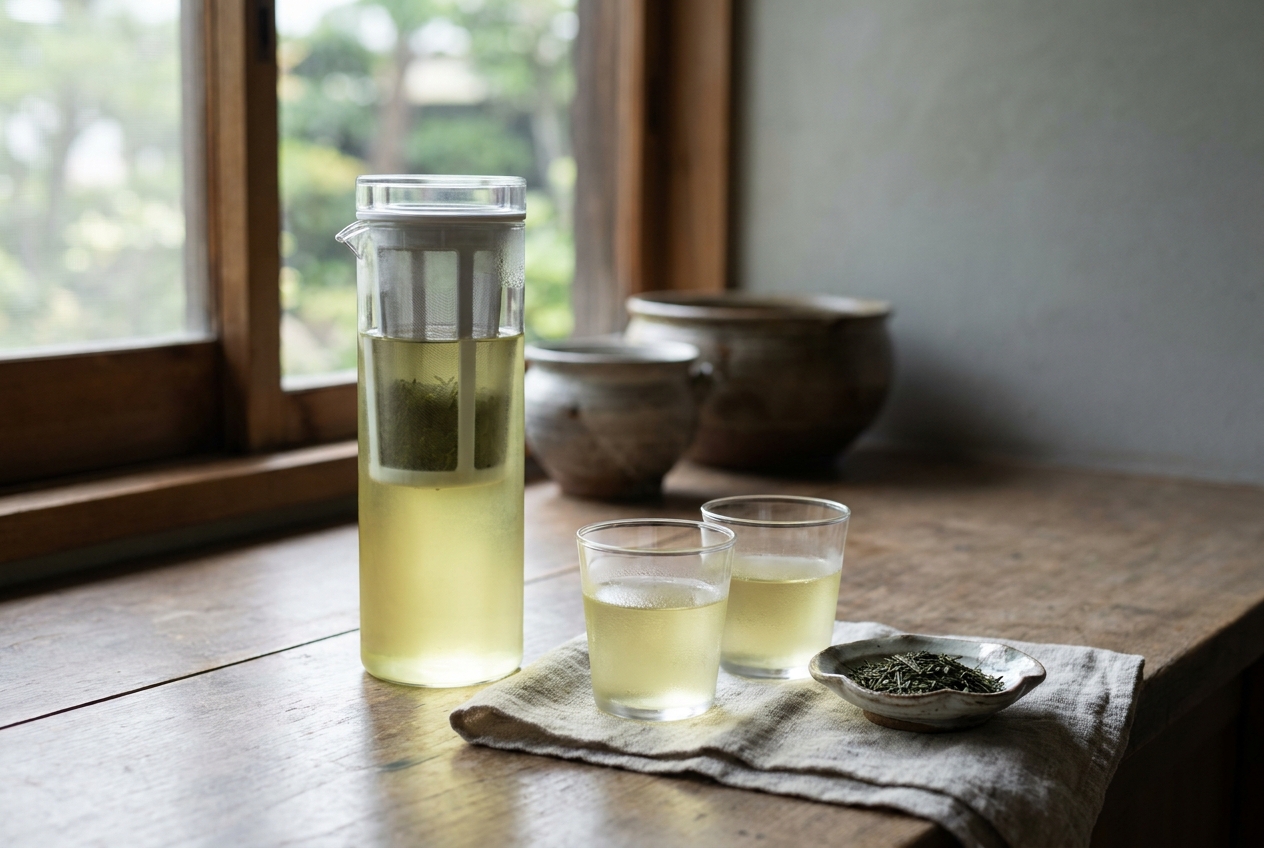
The filter-in bottle, the wine-bottle shape most search results show, holds about 750 ml and has its strainer in the neck. Its best feature is that it stands in a fridge door pocket. The thing nobody mentions on the listing is that the leaves stay in the bottle until the bottle is empty. If you brew in the evening and drink half the next afternoon, the second half has been steeping for twenty hours. Brew it at the overnight strength, or pour the whole batch off into a jug once it tastes right.
About leaks: reviews of these bottles split evenly between “leaks” and “doesn’t leak”, and the common worry is laying it on its side. Don’t trust a silicone stopper you haven’t tested. Fill it with plain water, lay it on its side in the sink for ten minutes, then decide whether it lives upright or lying down.
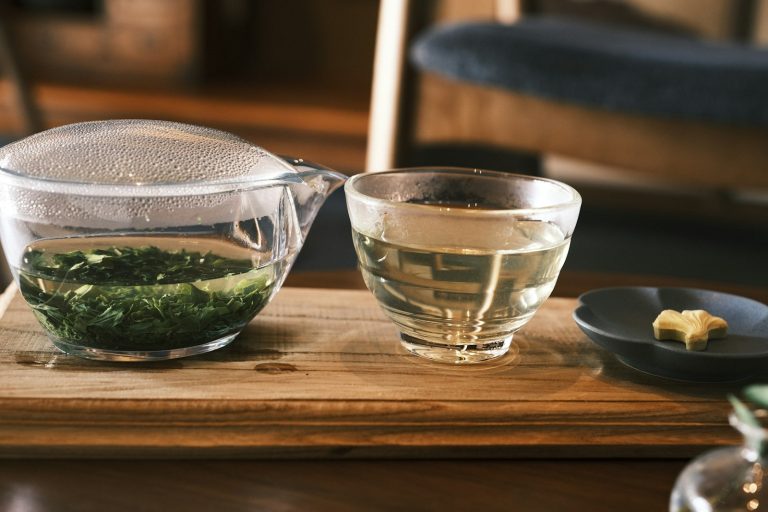
The mizudashi pot, a 1–1.2 litre glass pitcher with a mesh basket, is the one to buy if you’ll make cold tea every week. Hario’s 1-litre version is heat-resistant glass, which also lets you pour a splash of hot water over the leaves first if you like. The basket lifts out, so when the tea reaches the strength you want, you stop it there. It needs shelf space and won’t fit most door pockets.
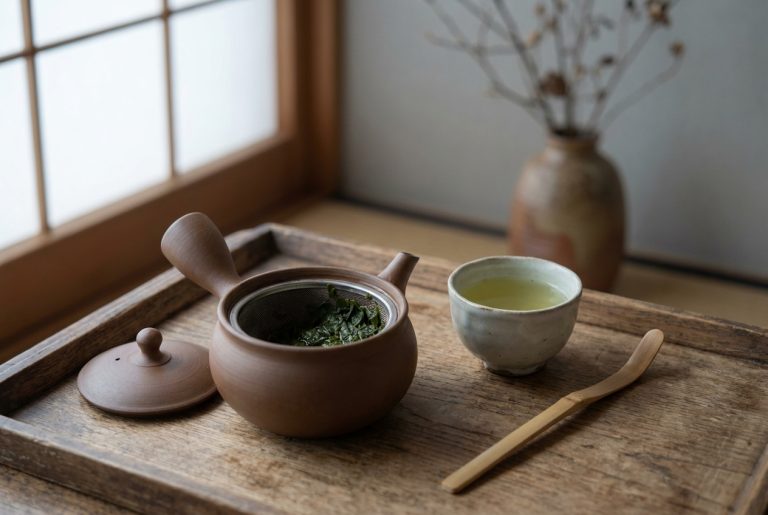
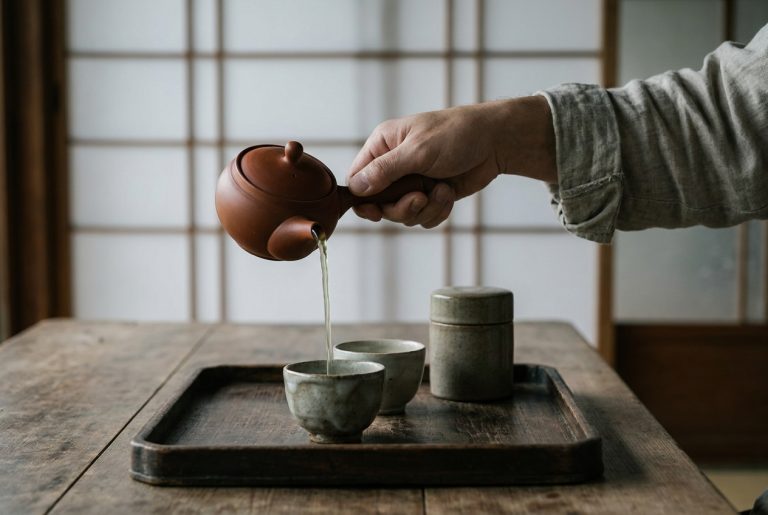
A kyusu or any small glass works for a single serving. A side-handle kyusu with a fine built-in strainer is fine for this, as long as you remember fine fukamushi leaf can clog a coarse one; our note on kyusu strainers for deep-steamed sencha explains which mesh to look for.
Buy this, not that
If you’ll cold brew every week, buy a 1-litre pot with a basket that lifts out, so you can stop the brew at 6–8 hours instead of drinking day-two tea that is still steeping. Buy the 750 ml filter-in bottle only if fridge space is the problem and you’ll finish it within a day. Don’t spend gyokuro money on a litre jug; brew it in a small pot and drink it the same hour.
How long does cold-brewed tea keep in the fridge?
This is where we’re deliberately cautious, because the sources disagree widely. One tea blog says about two weeks if unsweetened. A recipe site says two to three days. A Japanese food writer advises finishing it the same day. The Tea Association of the USA goes further and doesn’t recommend cold brew or sun tea as a way to make iced tea at all, preferring hot water. A 1996 CDC note pointed out that tea leaves can carry coliform bacteria, which can multiply if tea is brewed without heat or held too long.
Both that CDC note and the Tea Association say no illness has been confirmed as caused by tea. Still, when published advice runs from one day to fourteen, we follow the short end:
- Brew it in the fridge from the start, never on the counter or in the sun.
- Use a clean vessel, and wash the filter or basket each time; old tea dries into the mesh.
- Take the leaves out when it is ready.
- Drink it within about a day. If it smells sour, looks cloudy when it was clear before, or tastes off, pour it away.
- If any of this worries you, brew hot and pour it over ice instead. You lose some sweetness but none of the speed.
Colour is a good guide to taste, though not to safety. Cold sencha starts pale gold-green and drifts towards brown as it oxidises over a day or two. Brown tea isn’t necessarily unsafe, but it has gone flat, which is another reason to make smaller batches more often. How you keep the dry leaf matters too: an opened bag left in a warm cupboard loses exactly the sweetness that cold brewing depends on. See how to store green tea.
Water, a second batch, and the glass you pour it into
Water. A cold brew has nothing to hide behind. Hard water dulls green tea and chlorine shows clearly in a cold cup, so if your tap water is noticeably hard, use filtered water for this even if you don’t bother for hot tea. The reasons are covered in the best water for Japanese green tea.
A second batch. You can top the leaves up once with fresh cold water and get a lighter second jug. Do it straight away, in the fridge. Don’t keep wet leaves overnight for tomorrow’s batch.
The glass. In Japan, cold tea goes into a glass or a plain porcelain cup, rarely a thick stoneware yunomi. Thick clay warms the tea and hides the colour, and the colour is half the pleasure. If you’re choosing cups for summer, our yunomi guide explains which cups hold heat and which don’t. A cold jug and a few thin glasses on the table are also an easy way to give a summer table its season.
Quick answers
Can I just leave it overnight? Yes, at about 10 g per litre. Overnight at the 20–25 g “quick” dose gives you strong tea that may be bitter. If you only remember one rule: less leaf for longer, more leaf for shorter.
How many teaspoons is 10 grams? Roughly three to five level teaspoons, depending on how fine the leaf is. Weigh it once and note how many spoons it took.
Does cold brew have less caffeine? Caffeine dissolves less readily in cold water, so a cold brew usually tastes less bitter, but how much less caffeine you get depends on the leaf, the dose and the time. Don’t rely on it if you need to avoid caffeine. Barley tea (mugicha) has none.
Can I use tea bags? Yes. In Japan, sencha bags made specifically for cold water are a summer staple. Follow the packet for how much water each bag is meant for, since they’re cut finer than loose leaf.
Disclosure: Nagori Ware is an independent editorial guide written from Japan. Some links elsewhere on the site are affiliate links. Parts of this site are drafted with AI assistance and checked against Japanese sources. General information, not legal or safety advice.