Soba Choko: The Most Versatile Cup on the Japanese Table
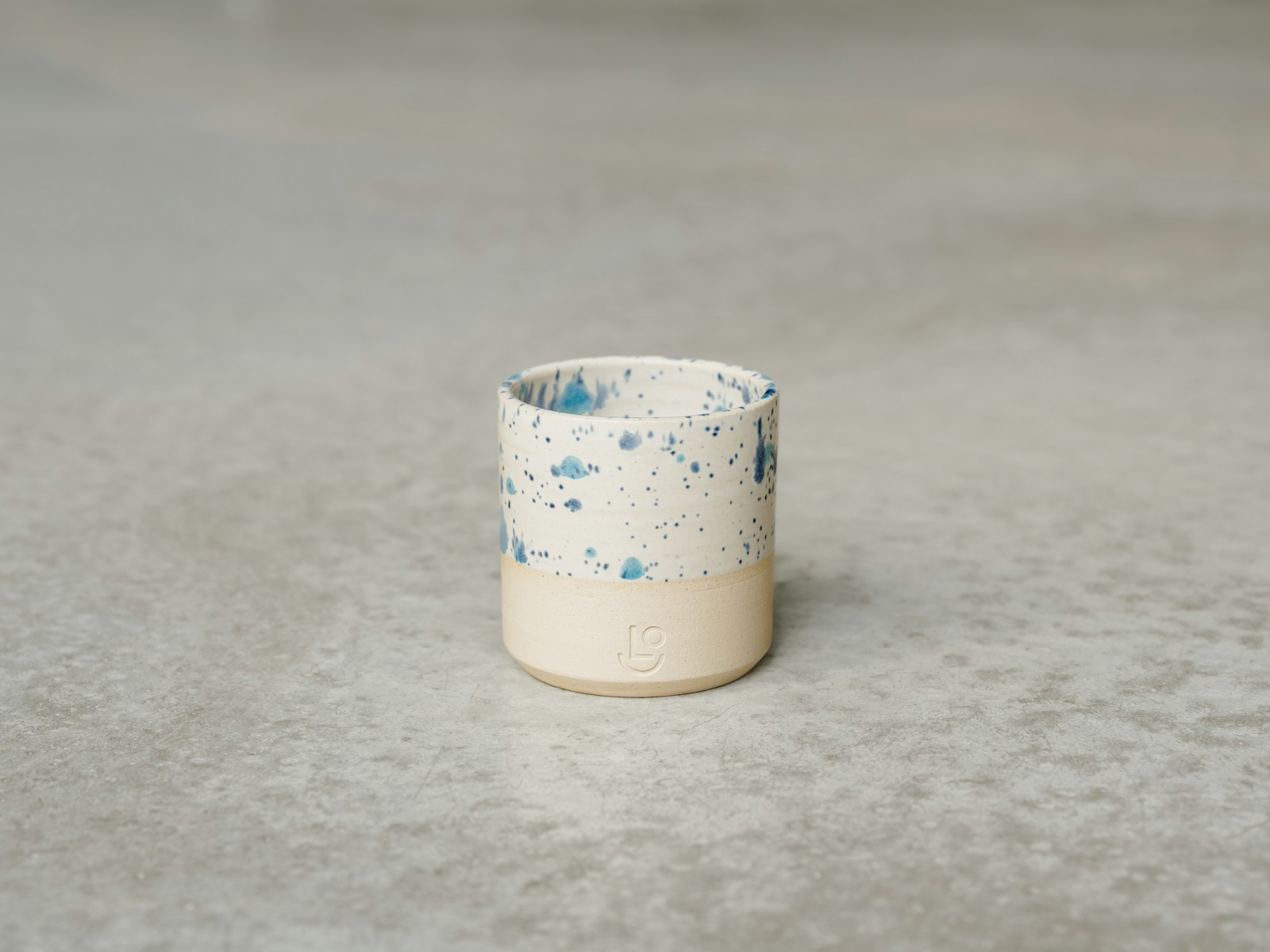
Most tableware is designed for one job and does it well. The soba choko was designed for one job in the seventeenth century, lost it, took another, and has been quietly re-hired ever since. The reason is not the pattern on the outside. It is the proportion: a small porcelain cylinder roughly as tall as it is wide, with walls that go more or less straight down. That single piece of geometry is why the same cup holds dipping sauce at lunch, pickles at dinner, and coffee the next morning without looking wrong in any of them.
A cup that keeps getting rehired
The shape belongs to the Edo period, and it did not begin as a soba cup at all. Cups of this size and profile were made in enormous numbers at the kilns of Arita, in old Hizen province, through the Edo Imari era — roughly 1620 to 1886 — and their first role at the table was mukōzuke: the small seasoned dish set at the far side of the tray in a formal meal, beyond the rice and soup.
Then soba shops spread through the cities, and the same handy cup was pressed into service to hold tsuyu, the cold dipping sauce. The name stuck to the second job. The first one never really went away, which is the point: this was always a general-purpose vessel that happened to get named after one of its uses. Four centuries of that is a strong recommendation.
The proportion is the whole trick
Modern soba choko cluster around 7–8 cm across the mouth and 6–6.5 cm tall, holding roughly 140–180 ml filled to the brim — which you would never do. Antique examples run smaller; a typical eighteenth-century one is nearer 6.5 cm across and 6 cm high.
Here is the thing worth noticing. A yunomi, the everyday teacup, holds about 150–220 ml — near enough the same. But it is taller and narrower, because it is built to keep hot tea hot and to sit in a curled hand. An ochoko holds 30–60 ml, a mouthful of sake. The soba choko is not simply “the middle-sized cup”. It carries a teacup’s volume in a much lower, wider, flat-bottomed body — which is exactly what makes it stable enough to dip into, shallow enough to reach the bottom of with chopsticks, and stackable in a column instead of a row.
How it is actually used with soba
At a soba shop the cup arrives with the sauce already in it, and it is not full — about halfway is right. You add what you want of grated daikon, wasabi, or sliced spring onion, lift a small bundle of cold noodles from the draining tray, and dip only the bottom third to half of the bundle before you eat it. The sauce is concentrated. Submerging the whole bundle drowns the buckwheat, which is the thing you came for.
The straight walls earn their keep here. A bundle of noodles lowered into a cylinder stays where you put it, and you can see how deep it has gone. Lower the same bundle into a rounded teacup and it slides down the curve to the centre, soaking further up than you intended, and the level rises to meet it. It is a small thing that happens twenty times a meal.
The other jobs
Because it looks deliberate in every one of these roles rather than borrowed, a set of soba choko can quietly retire a cupboard of single-use pieces:
- As a kobachi-style side dish for pickles, simmered vegetables, or a spoonful of something dressed — the same role the small dishes play, in a taller format that suits anything with liquid in it.
- As a dessert cup: panna cotta, yogurt and fruit, a scoop of ice cream. The flat bottom means a spoon reaches everything.
- As a cup for iced coffee, barley tea, or a small pour of something cold.
- As a holder for condiments at the table, or for a very short posy of flowers.
Patterns, and what to check before you buy
The classic decoration is blue-and-white: hand-painted sometsuke in cobalt under the glaze, or inban, transfer-printed patterns, which is how they were made in quantity. Geometric bands, chrysanthemums, waves, auspicious motifs — and often one small design hidden inside the base, which you only find when the cup is empty. That hidden mark is a large part of why collectors chase antique examples.
For everyday buying, three checks. Turn the cup over: the foot ring should be smooth enough that it will not score a lacquer tray — run a thumbnail around it. Set it on a flat surface: it should not rock. And look at where the glaze meets the foot: a clean, even line there tells you more about the workshop than the pattern on the outside does. Porcelain is the practical material, and the reason most soba choko are porcelain rather than the more absorbent stoneware bodies covered in our guide to Japanese tableware: it is non-porous, so it does not carry yesterday’s dashi into today’s coffee.
What not to buy
- Antique Edo soba choko, if you actually want to use them. They are lovely and they are collectors’ pieces: crazed glaze, uneven rims, a rough foot, and no maker to complain to. Buy one to look at if you love it. Buy modern porcelain to eat from.
- A set of four. Japanese sets come in fives — shi, four, is also the word for death, so four-piece sets are avoided outright. Five is the standard, and it is the more useful number anyway.
- Gold- or silver-rimmed examples, if this is your everyday cup. Metallic trim rules out the microwave entirely and wears with washing. The same rule applies across Japanese tableware.
- A soba choko as your hot tea cup. This is the honest limit of the shape. Thin porcelain with a wide mouth and no handle means the rim runs hot, your fingers are close to the liquid, and the tea cools fast. That is what a yunomi’s taller, narrower body is for. Use the choko for cold drinks and the yunomi for hot ones, and each is excellent.
Care and storage
Everyday porcelain soba choko are close to maintenance-free. Non-porous, so no flavour transfer and no seasoning ritual — none of the medome and long-drying routines that unglazed stoneware needs. Most are perfectly happy in the dishwasher, though hand-washing keeps hand-painted and rimmed patterns looking right for longer. Because they nest, store them in a column of five rather than a row; stack them rim-down on a cloth if you are stacking them wet.
Buying your first five
Start with five in a single blue-and-white pattern you would be happy to see at breakfast and at a dinner party — that combination is nearly impossible to make look wrong, and it matches almost any plate you already own. Add a contrasting pattern or two later, as you come across them; a shelf of mismatched choko collected over years is a look in its own right, and a very Japanese one. Few pieces of tableware give you this much range for this little shelf space, which is precisely why the shape keeps finding new work four centuries on.
Related guides
- Best Japanese Noodle Bowls — the bowls and trays that partner with a soba choko for cold noodles.
- Yunomi: Everyday Japanese Teacups — the taller cup built for hot tea.
- Japanese Sake Sets — where the ochoko fits in.
- Small Dishes: Kobachi & Mamezara — more little vessels for a Japanese table.
- Japanese Tableware Guide — how the whole table fits together.
Disclosure: Nagori Ware is an independent editorial guide written from Japan. Some links elsewhere on the site are affiliate links. Parts of this site are drafted with AI assistance and checked against Japanese sources. General information, not legal or safety advice.