The Best Japanese Ramen Bowls: A Buyer’s Guide by Size, Material and Style
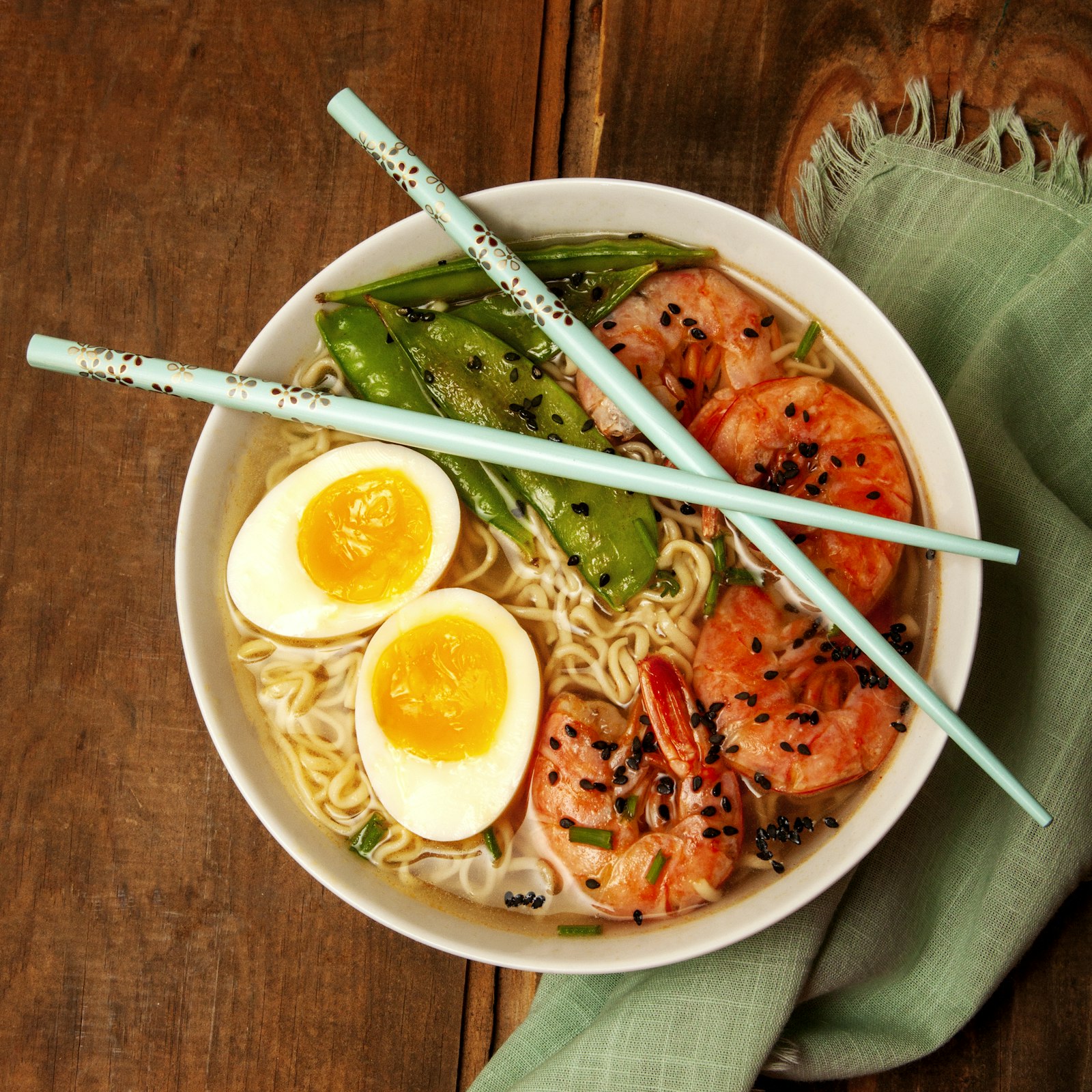
A bowl of ramen is mostly heat. Broth just under a boil, noodles that keep cooking as they sit, a cloud of steam you lean into — and the bowl is the one thing holding all of it together, in your two hands, for the ten minutes that matter. A good ramen bowl is built for that job. A cereal bowl is not.
This is a practical guide to choosing one: how big it really needs to be, why material decides everything, the shapes that keep broth hot, and the difference between an authentic Japanese donburi and a generic import. Then a shortlist, organized by how you actually use it.
What counts as a Japanese ramen bowl
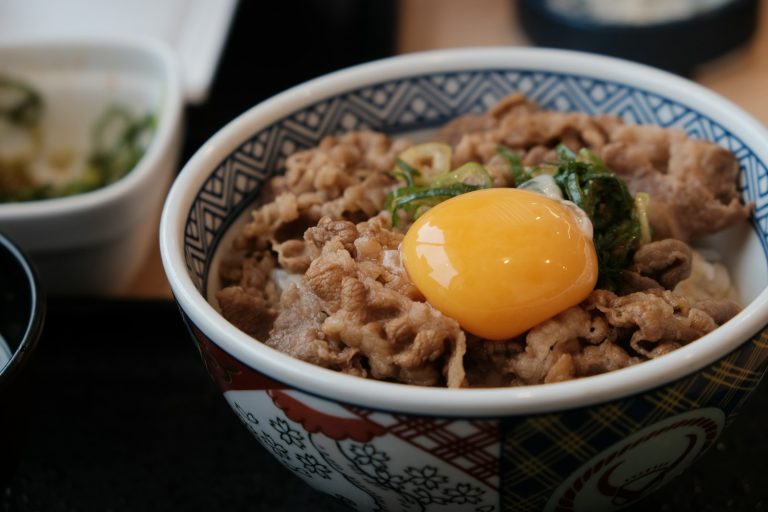
In Japan a large bowl for a rice- or noodle-based one-dish meal is a donburi (丼). A ramen bowl is a donburi sized and shaped for soup noodles: wide enough to arrange toppings, deep enough to submerge a full portion of noodles in broth, and heavy enough to sit still while you eat. It is a different vessel from a rice bowl (chawan) entirely — bigger in every dimension.
How big should a ramen bowl be? Ramen bowl size in ml, and the mistake most people make
Home cooks almost always buy too small. A restaurant-style portion — noodles, roughly 500–700 ml of broth, plus chashu, egg, and greens — needs real volume. Aim for a rim diameter of about 20–23 cm (8–9 in) and a capacity of 1,000–1,600 ml. Below about 1,000 ml you will be fighting the bowl; broth rides too high and toppings crowd. If you like extra broth or share, size up rather than down.
Buy this, not that
If you buy one bowl, buy a flared porcelain bowl of 1,000–1,300 ml and 20–23 cm at the rim. Don’t buy the pretty 800 ml bowl that photographs well: 500–700 ml of broth plus noodles and toppings will ride to the rim, and you will spend the meal steering it instead of eating. Don’t buy melamine for a home kitchen — restaurants use it because it survives being dropped 40 times a night, not because it is nice to eat from. And if you already own a large donburi, try it before you buy anything: at the top of its range it may already be doing the job.
If the listing quotes ounces
Japanese makers publish capacity in millilitres. American shops republish it in fluid ounces, and most of the English ramen-bowl guides quote ounces only — which leaves you holding two numbers that never meet. Here is the same band in both units, so you can check a listing without doing arithmetic at the till.
| Capacity | In US fl oz | What it is |
|---|---|---|
| 800 ml | 27 oz | Too small for a restaurant portion. Sold as a ramen bowl anyway. |
| 1,000 ml | 34 oz | The floor. One portion, no room to spare. |
| 1,300 ml | 44 oz | The comfortable middle, and where we would buy. |
| 1,600 ml | 54 oz | Generous. Extra broth, big toppings, sharing. |
The American guides tend to recommend 35–50 oz, which works out at 1,035–1,480 ml. That sits inside the band above rather than against it, so the two traditions agree more than the unit change suggests. Where the ounce figure misleads is at the bottom: a 20–25 oz bowl reads like a modest choice and is in fact 590–740 ml, which is less than the broth alone in a restaurant portion.
Material: why porcelain wins for ramen
Porcelain (jiki 磁器) is the standard for good reason. Fired hard and dense, it holds heat well, resists chips and stains from oily broth, wipes clean, and takes the microwave and dishwasher without complaint. Most authentic ramen bowls — from Mino and Arita especially — are porcelain.
Stoneware (tōki 陶器) ramen bowls exist and feel wonderful — heavier, warmer, more tactile — but they can be more porous and ask for gentler care. Melamine is what many restaurants use: light, unbreakable, cheap, and the reason a lot of imported “ramen bowls” feel plasticky. For a home you will keep, choose ceramic over melamine.
Why a cold bowl costs you more heat than the wrong material
Every guide to ramen bowls, this one included, tells you that porcelain holds heat better than melamine. That is true and it is also the smaller of the two effects. The larger one is whether the bowl was warm when the broth went in, and almost nobody mentions it.
Ramen shops do. The standard move in a restaurant kitchen is to ladle boiling water from the noodle cooker into the empty bowl, let it stand while the noodles cook, then tip it out just before assembling. The bowl is not being cleaned. It is being charged.
The arithmetic is worth seeing, because it explains why your broth arrives at the table cooler than it left the pot. Water carries 4.18 joules per gram per degree; fired clay carries about 0.85. Put 700 ml of 90 °C broth into a bowl sitting at room temperature and the two meet in the middle:
| The bowl | Starting at | Broth lands at | You lose |
|---|---|---|---|
| Light bowl, about 400 g | 20 °C (room) | 83 °C | 7 °C |
| Heavy bowl, about 800 g | 20 °C (room) | 77 °C | 13 °C |
| Heavy bowl, about 800 g | 60 °C (warmed) | 84 °C | 6 °C |
Read the second and third rows together and the received wisdom turns over. The thick, heavy, well‑made porcelain bowl — the one recommended precisely because it holds heat — is the one that robs you of the most heat if you serve into it cold. Thermal mass is a battery, not a blanket. It keeps your broth warm later only because it took that warmth from your broth first. Charge it beforehand and the same mass works for you all the way down the bowl; skip that step and you have bought a heat sink.
This is also the honest answer to the melamine question. A restaurant melamine bowl is light enough that it steals little on contact — which is part of why busy shops tolerate it — but it has nothing in reserve, so the broth cools steadily from there. Ceramic beats it over the length of a meal, and only if it starts warm.
How to do it without risking the bowl
Fill the bowl with hot water from the tap while the noodles cook, give it two or three minutes, pour it out and dry the rim. Tap‑hot is enough to get most of the benefit in the table above, and it avoids the question of how your particular piece handles a sudden jump in temperature. Restaurant kitchens use boiling water on bowls chosen for that treatment; at home, with a hand‑made or older piece, there is nothing to gain by pushing it. The care guide covers which wares are sensitive and how to look after them, and if you were thinking of warming the bowl in the microwave instead, check the piece against the microwave and dishwasher guide first — gold and silver trim rules that out.
Shape, rim and weight
- Flared (trumpet) shape — the classic ramen silhouette. The wide mouth cools the top layer slightly and shows off toppings; the narrower base keeps the core hot.
- Straight, deep walls — hold the most heat and are best if you eat slowly, though toppings sit lower.
- A lipped or rolled rim is kinder to the hands and mouth than a thin cut edge.
- Weight matters: a heavier bowl stays put while you pull noodles, but you rarely lift a ramen bowl the way you lift a rice bowl, so heft is a feature, not a flaw.
Types of ramen bowl: what Japanese suppliers actually call them
English guides to this subject usually offer a list of names, and the names do not always survive the trip. So here is the list a Japanese restaurant buyer sees, taken from the wholesale catalogues that supply ramen shops rather than from shops selling to visitors. There are four shapes, and each is chosen for a reason that has nothing to do with looks.
| Name | What it looks like | Why a shop buys it |
|---|---|---|
| Kōdai-don / sori-kōdai-don (高台丼 / 反高台丼) | A pronounced foot ring and a rim that turns slightly outward. | Holds plenty of soup. The orthodox ramen bowl and the default order. |
| Kittachi-don (切立丼) | Straight, upright sides — a cylinder rather than a cone. | Easy to hold in one hand and stacks tightly. Holds noticeably less soup. |
| Tama-don / tamabuchi-don (玉丼 / 玉渕丼) | Round and wide, with a thick, rolled rim. | The wide floor lays out toppings, and the fat rim resists chipping. Bought for topping-heavy bowls such as tanmen. |
| Tayō-don (多用丼) | A general-purpose bowl, usually mid-flare. | Does ramen, katsudon and udon off one shelf. The one to buy if you are buying one. |
If you own a single large bowl and want it to work for more than noodles, you are buying the tayō-don, which is also the bowl that blurs the line with a donburi bowl. If you have a small kitchen and stack everything, the straight-sided kittachi is the practical choice and you accept less broth. If you build bowls with a lot on top, the wide tama shape is the one that gives the toppings somewhere to sit.
The sizes, in the units the catalogue uses
Japanese suppliers size these in sun (寸), an old unit of about 3.03 cm that still runs quietly through Japanese tableware listings. The ladder below is the one printed in the trade, with the styles each size is bought for.
| Size | Diameter | Capacity | What it is bought for |
|---|---|---|---|
| 6.3 sun | about 19 cm | about 800 ml | Tonkotsu and Hakata style, small portions, children |
| 7.0 sun | about 21 cm | about 1,200 ml | The standard bowl — shoyu and shio |
| 7.5 sun | about 22.5 cm | about 1,400 ml | Large servings and topping-heavy bowls; miso |
| 8.0 sun | about 24 cm | about 1,600 ml and up | Jiro style, extra-large, heavy miso |
Note where that lands. The restaurant standard, 7.0 sun at roughly 1,200 ml, sits in the middle of the 1,000–1,300 ml range recommended above for a home bowl. The trade and this guide are not saying different things. The trade is just saying it in sun.
Why tonkotsu comes in a smaller bowl
The one line in that table that looks wrong is tonkotsu at 6.3 sun. Richer soup, smaller bowl — why? Because of kaedama, the extra portion of noodles you order into the soup you already have. The system began at a street stall in Nagahama, Fukuoka, that opened in 1952 and fed fish-market workers: the noodles were cut very thin so they would cook in seconds, and thin noodles go soft fast, so the first serving was deliberately small and you topped it up. A bowl built for that holds one small portion of noodles and enough soup to survive a refill. It is not a smaller meal. It is a meal delivered in two parts.
That is the only regional difference in bowls that Japanese suppliers actually encode in their catalogues. English guides sometimes go further — thicker bowls for Sapporo, taller ones for Tokyo — and we could not find a Japanese source for those claims, so they are not repeated here.
A last note on names, because search results for this are a mess. The word donburi (丼) refers to the deep bowl in general and also to the rice dishes served in it, so a ramen bowl is a kind of donburi and a katsudon bowl is another kind. They are not opposites. We work through where the line actually falls in ramen bowl vs donburi bowl.
Which bowl for which ramen: shoyu, miso, tonkotsu and tsukemen
Most guides organise this section around the style names, as if a miso bowl were a different object from a shoyu bowl. It isn’t. What actually changes between ramen styles is how much broth arrives and how fast it cools, and that is a question about depth, not decoration. Choose on those two numbers and the style names take care of themselves.
Two things follow. A thin, clear shoyu or shio broth loses heat quickly, so it wants a deeper, narrower bowl that keeps the surface area down — the same reasoning that makes a wide, shallow bowl the wrong choice for soup generally. A heavy tonkotsu or miso broth carries more fat, holds heat far better, and arrives in larger volume, so it can take the wider bowl comfortably. If you are buying one bowl for everything, buy for the thin broth; it is the harder case, and the fatty broths will be fine in it.
| Style | What the broth is doing | Bowl to buy |
|---|---|---|
| Shoyu / shio | Thin, clear, cools fastest | Deeper and narrower — around 1,000–1,200 ml (35–40 fl oz), 9–10 cm deep |
| Miso | Thicker, more volume, holds heat | The wide 1,200–1,300 ml (40–45 fl oz) bowl works here |
| Tonkotsu | Fatty, richest, holds heat longest | Same wide bowl; depth matters least of any style |
| Tsukemen | Served separately and 2–3× as concentrated | Two vessels — a wide, shallow bowl or plate for drained noodles, plus a small deep cup for the dip |
Tsukemen is the one genuine exception, and it is worth saying plainly because it is where people waste money. Dipping ramen does not use a ramen bowl at all. The noodles are drained and laid on something wide and shallow so they do not sit in their own water, and the broth — deliberately concentrated to two or three times the strength of a soup broth, because it only has to coat the noodles — goes in a separate small cup. If tsukemen is what you actually eat at home, a single large ramen bowl is the wrong purchase, and no amount of size will fix it.
One note on units, since American listings and Japanese listings do not agree. Japanese makers publish capacity in millilitres and diameter in centimetres; US retailers publish fluid ounces and inches, and they usually quote the bowl filled to the brim rather than to a usable level. A bowl advertised at 50 fl oz is not 50 fl oz of ramen — it is a bowl that holds that much water with nothing in it. Work in millilitres where you can, and treat a brim-full ounce figure as roughly a fifth larger than what you will actually serve.
The look: raimon and other authentic patterns
The squared-spiral border you picture on a ramen bowl has a name: raimon (雷文), the “thunder” or key-fret pattern. It is the most recognizable ramen motif, but far from the only authentic one — blue-and-white sometsuke, phoenix and dragon designs, and plain modern glazes from Mino are all at home. You do not need the swirl; you need honest ceramic. Recognizing the names simply helps you shop with intent rather than buying the first “Japanese-style” bowl you see.
Japanese-made or generic import: how to tell before you buy
This is the question the photographs are worst at answering, because a plain white bowl with a blue key-fret border looks the same whoever made it. Four checks settle it, and all four can be done from the listing.
1. Country of origin is a field, not an impression. Shops that supply Japanese restaurants print it per item, and it does not always say Japan — the same shop will carry a Japanese-made bowl and an imported one on adjacent pages at similar prices. A marketplace listing that describes a bowl as “Japanese style” and never names a country has told you the answer by omission.
2. If it is Japanese and it is plain, it is almost certainly Mino. This is worth knowing because “Mino ware” on a modest bowl reads to Western buyers like a boast, and it is not one. Gifu prefecture — where Mino ware is made — accounted for 53.8 per cent of Japan’s ceramic tableware production by value in 2021, and 51.4 per cent in 2019, under the national industrial statistics. More than half of the everyday Japanese dishes in existence come from three towns. A plain Mino porcelain donburi is not a special edition; it is the ordinary case, and it is priced like one. If you want to place the other names you will see, that is what our guide to Japanese pottery styles is for.
3. Look at which numbers are given. A Japanese listing quotes rim diameter (kōkei), height and brim-full capacity in millilitres, because that is what a Japanese buyer checks. A generic import quotes one diameter in inches and no capacity at all. That is not a translation problem — it is a different kind of seller. The rest of the vocabulary is unpacked in how to read a Japanese tableware listing.
4. Turn it over in the photographs. A bowl made to be handled has a trimmed foot ring (kōdai) with a band of unglazed clay showing, and a shop that expects you to care will photograph it. No base photograph on a bowl this size is itself a signal. The foot is doing real work here, and the guide to lifting bowls explains what it tells you.
One honest caveat, because the internet is snobbish about this. “Made in Japan” is not a quality guarantee, and a bowl produced abroad to a Japanese maker’s specification can be perfectly good. The distinction that actually changes your dinner is the one in the material section above — porcelain against melamine — and that one is visible in the weight the moment the box arrives. Origin tells you who you are buying from. Material tells you what the bowl will do.
Comparison at a glance
| Pick (by need) | Ware / Material | Feel | Care | Typical price* |
|---|---|---|---|---|
| Best all-round ramen bowl | Mino, porcelain | Light, hot-holding, durable | Dishwasher & microwave safe | $$ |
| Best large / sharing size | Mino or Arita, porcelain | 1,300 ml+, roomy | Dishwasher-safe | $$ |
| Best classic raimon design | Porcelain, patterned | Iconic, restaurant look | Dishwasher-safe | $$ |
| Best for texture lovers | Stoneware | Heavy, warm, tactile | Hand-wash preferred | $$$ |
| Best value set of two | Mino, porcelain | Matched, everyday | Dishwasher-safe | $$ |
Our picks: Japanese-style ramen bowls worth buying
Where to buy: for authentic, Japan-shipped pieces we point you to specialist shops rather than generic marketplaces. Purchase and payment complete on their site.
1. The all-round Mino bowl. Porcelain, around 1,000–1,300 ml, a flared shape that suits any bowl of ramen. If you buy one bowl, buy this — it does everything and survives daily life.
2. The large sharing bowl. 1,300 ml and up, for generous broth, extra toppings, or tsukemen dipping portions. The size restaurants actually use.
3. The classic raimon bowl. The key-fret border and deep well — the bowl that looks like ramen should. A gift-friendly, unmistakably Japanese choice.
4. The stoneware character bowl. Heavier and warmer in the hand, with a glaze that shows the maker. For the cook who wants the bowl to feel made, not manufactured.
5. The value pair. Two matched porcelain bowls so ramen night works for two. The sensible starting set.
Caring for your bowl
- Porcelain is easy: dishwasher and microwave safe in almost all cases. Avoid any piece with metallic or gold painting in the microwave.
- Stoneware prefers hand-washing and dislikes sudden temperature shocks — do not pour boiling broth into a cold bowl straight from a cabinet in winter; warm it with hot tap water first.
- Warming the bowl before serving keeps ramen hotter for longer, whatever the material.
Frequently asked questions
How big should a ramen bowl be?
For a full restaurant-style portion, look for 1,000–1,600 ml capacity and a 20–23 cm rim. Smaller bowls work for light portions but crowd quickly.
Is a donburi bowl the same as a ramen bowl?
A ramen bowl is a type of donburi — the broad family of large Japanese bowls. Rice-dish donburi (like gyudon or katsudon) are often a little smaller and straighter; a ramen donburi is sized for soup and noodles.
Can I use a ramen bowl in the microwave and dishwasher?
Most glazed porcelain ramen bowls are safe for both. Unglazed stoneware and any piece with metallic decoration are not — check the maker note.
Porcelain or stoneware for ramen?
Porcelain for easy, durable, everyday use and heat retention. Stoneware if you want warmth and weight and do not mind hand-washing.
About this guide
Nagori Ware is an independent guide to Japanese tableware and tea. We research materials, regions and makers so you can buy once and buy well. We do not sell products; we point you to the specialist shops that make and stock them, and may earn a referral fee if you buy.
Disclosure: Nagori Ware is an independent editorial guide written from Japan. Some links elsewhere on the site are affiliate links. Parts of this site are drafted with AI assistance and checked against Japanese sources. General information, not legal or safety advice.