Japanese Tableware & Tea Gifts: What to Give, and Why the Number Matters
Walk into a tableware shop in Japan and count the dishes. Small plates come boxed in fives. Teacups come in pairs. You will look for a long time before you find a set of four, and once you know why, you cannot unsee it: shi (四) is four, and shi (死) is death.
That is the strange thing about giving Japanese tableware. Choosing a beautiful bowl is the easy part. The part that decides whether the gift lands is a handful of conventions that are invisible until someone points at them — how many pieces, what the cord on the wrapping means, and the two occasions where a ceramic gift needs a second thought. Here is all of it, along with what to give for a particular person and what a given budget actually buys.
Start with the number, not the pattern
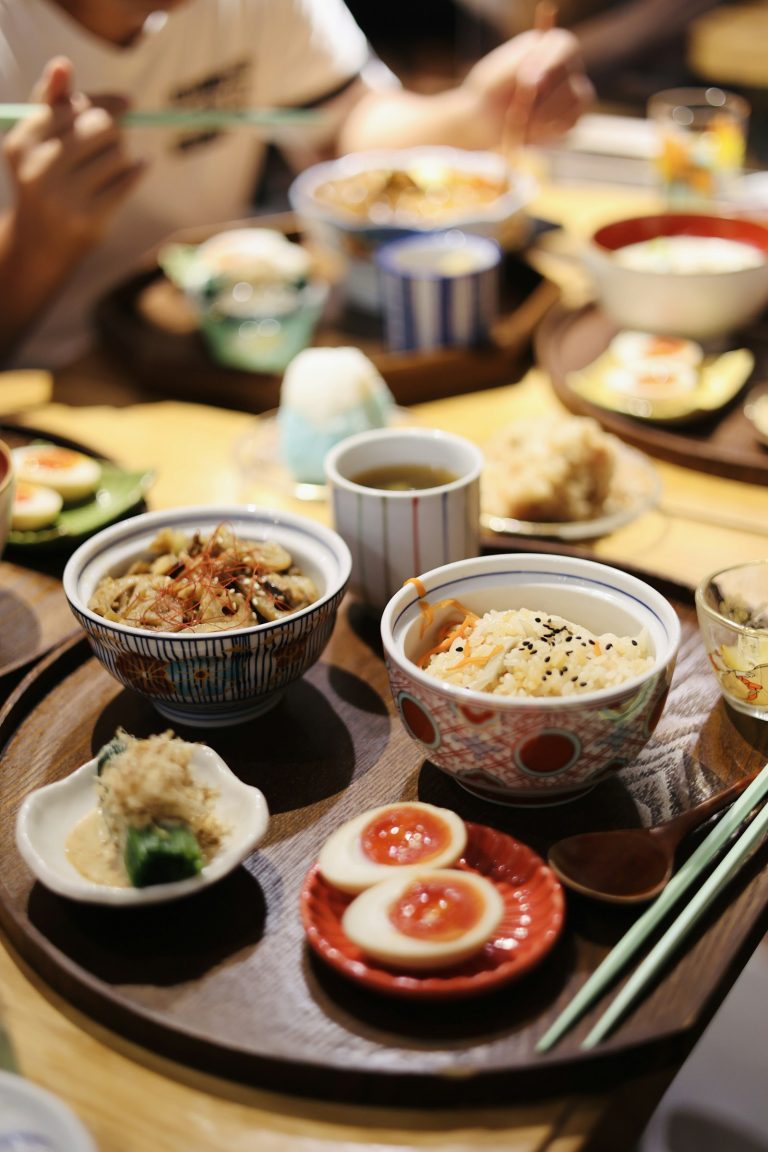
Japanese gift sets are counted in odd numbers, and five is the standard. A boxed set of five small dishes — go-kyaku, “five guests” — is the default unit for plates, cups and bowls, on the old logic that a table seats a household. Three and seven carry the same auspicious sense. Pairs are their own category, and a good one: two of something is a gift for two people who eat together.
Two numbers are avoided. Four sounds like death, as above. Nine (ku, 九) sounds like suffering (苦), a softer taboo but still one worth sidestepping. In practice this only bites when you buy from a Western retailer, where dinnerware is sold in fours and eights by default. If the recipient has any connection to Japan, buy the five-piece box, or buy two.
The pair that means something: meoto
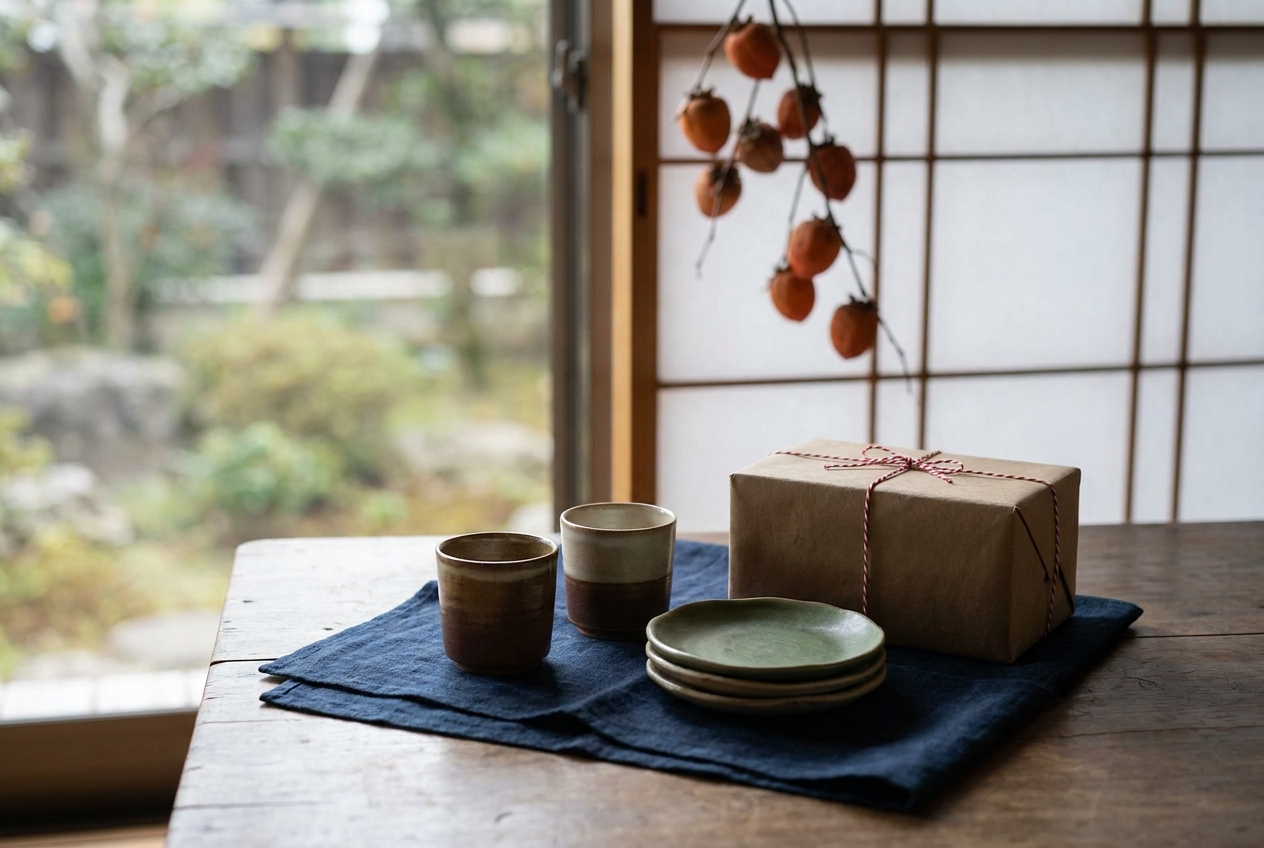
If you give one thing from this whole guide, make it a meoto pair. Meoto (夫婦) means husband and wife, and a meoto yunomi or meoto chawan is two cups or two rice bowls in the same pattern, made in slightly different sizes — traditionally the larger for the husband, the smaller for the wife. Plenty of couples now simply take the one that suits their hands, which is a better rule anyway.
What makes it a good gift is not the ceramic. It is that the pair only works when two people sit down together, so the object quietly assumes a habit. It is the standard Japanese wedding and anniversary gift for exactly that reason, and it solves the hardest problem in gifting tableware: you are not asking someone to rebuild their cupboard, you are giving them one small ritual. If it is a tea drinker’s household, look at yunomi; if they eat rice daily, a pair of rice bowls does the same job at the dinner table.
What to give, by the person
The useful question is not “what is nice” but “what will they reach for on a Tuesday.” Match the piece to how the person actually eats.
| The person | Give | Why it works |
|---|---|---|
| Cooks constantly | A set of five small dishes (mamezara, kobachi) | Sides, pickles, condiments, olives, salt — almost impossible to already own too many |
| Drinks leaf tea | A kyusu with two cups | Upgrades a daily ritual they already have; a teapot is a real step up from a bag in a mug |
| Curious about matcha | A beginner matcha set | Bowl, whisk and scoop together — the one case where a full set beats a single piece |
| Newlyweds | A meoto pair of cups or rice bowls | Traditional, unmistakably a couple’s gift, and small enough for any kitchen |
| Hosts often | A long serving plate or sushi plate | Serveware gets used in front of guests, so it is the piece they remember you by |
| Drinks sake | A tokkuri and ochoko set | Warm or chilled, it turns a bottle into an occasion |
| First apartment | Rice bowl, soup bowl and a plate in Hasami ware | Durable porcelain, dishwasher-tolerant, cheap to add to later |
| Has everything | One exceptional single piece — a wood-fired Bizen cup, a hand-painted Kutani mamezara | Nobody buys themselves the extravagant version of a tiny object |
One principle runs under the whole table: give the piece with the most jobs, not the most pieces. A single deep soba choko cup will serve dipping sauce, tea, yogurt, a scoop of ice cream and a few pickles — see the noodle bowl guide for where it fits. A twelve-piece matched service will serve dinner, twice a year, if it fits the cupboard at all.
Two occasions where ceramics need a second thought
Weddings
Traditional Japanese etiquette is wary of warimono — breakables — as wedding gifts, because a thing that breaks suggests a couple that splits. Taken literally, that would rule out this entire site. In practice it does not, because the counter-tradition is stronger: a matched pair of ceramics is one of the most common wedding gifts in Japan, precisely because a pair reads as union rather than fracture.
So the resolution is simple. Give a pair, and let the pairing be the point — two cups, two bowls, a teapot with two cups. If the family is formal and you are unsure how they will read it, ask someone close to them, or move to lacquerware, wood, or a food gift instead. Attitudes here have loosened a great deal in a generation, but the pair is the version that has never needed defending.
A new home
Housewarming gifts have their own list of things to skip, and it is not the one you would guess. Anything suggesting fire is out — candles, lighters, stoves, strongly red objects — because fire is what you wish away from a new house. Wall art and clocks are traditionally avoided too, on the grounds that hanging them means putting a hole in a brand-new wall. Strict readings add breakables to the list, for the same “cracking” logic as at weddings.
Modern households are far more relaxed, and a stack of everyday plates is a genuinely welcome housewarming gift in most circles — it is useful on day one, when the kitchen boxes are still taped shut. The safe version, if you want to honor the old rule without abandoning the idea: give something that is unmistakably for daily use rather than for display, and skip anything candle-adjacent.
And a note about the tea itself
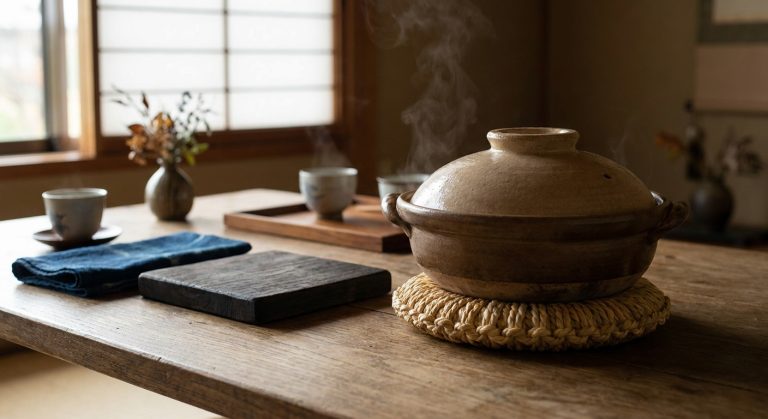
Green tea is the customary return gift after a funeral in Japan — light, keeps well, appropriate for mourners — which is why some people quietly avoid giving it for a celebration. This is worth knowing and easy to work around, because it applies to the leaf, not the pot. A kyusu, a set of cups, or a tea setup carries none of that association. A boxed bag of sencha as a wedding gift, to a traditional recipient, might.
The same wordplay logic explains one more rule you may run into: knives and scissors are avoided as wedding or housewarming gifts, since cutting suggests cutting ties. Japanese kitchen knives are a wonderful gift in almost every other context.
The wrapping is part of the message
A formal gift in Japan arrives wearing two things: noshi, a folded paper ornament that descends from a strip of dried abalone once offered as an auspicious token, and mizuhiki, cords of stiffened twisted paper tied across the front. The cords are not decoration. The knot states what kind of occasion this is.
Shops in Japan ask what the occasion is before they wrap, and choose the paper accordingly. Ordering from overseas, you will usually get a plain box and no cord — in which case a short handwritten note does the same work, telling the recipient what the gift is marking. If you want the wrapping to be part of the present, a furoshiki cloth is the elegant answer: it wraps the box and then stays behind as a thing they keep.
What your money actually buys
Japanese tableware rewards small budgets unusually well, because the culture treats a single well-made object as a complete gift. Ranges below are typical for pieces from specialist Japanese shops; check current prices, and factor in shipping from Japan and any import duties in your country.
| Budget | What it buys | Worth knowing |
|---|---|---|
| Under $30 | A single mamezara, one good yunomi, a pair of chopsticks with rests | Not a token — a small hand-painted dish is a real object with a real maker |
| $30–80 | A meoto pair of cups, a five-piece small-dish set, a very good rice bowl | The sweet spot for most gifts; this is where boxed sets start |
| $80–200 | A kyusu with cups, a beginner matcha set, a two-person dinnerware start | Enough for a complete setup rather than a single piece |
| $200 and up | An artist’s piece, a dinnerware set for five, cast iron | Ask about the maker and kiln — at this level, provenance is what you are buying |
Five ways this goes wrong
- Buying a large matched service. The Japanese table is deliberately unmatched — different pieces, different wares, gathered over years. A twenty-piece matching set is a Western idea wearing Japanese patterns, and it is the least Japanese gift on the shelf.
- Sets of four. Worth repeating, because Western retailers default to it.
- Assuming everything is dishwasher-safe. Much modern porcelain is; unglazed stoneware, gold or silver decoration, and lacquer are not. If the recipient will never hand-wash anything, buy porcelain and say so — start with what is actually microwave- and dishwasher-safe.
- Giving high-maintenance ware to a low-maintenance household. A rustic unglazed piece needs habits, not just care instructions. Our care guide is a fair test of whether the gift suits the person.
- Guessing a very personal size. Rice bowls and teacups are fitted to a hand and held daily, so tastes are real. If you do not know the person’s preferences well, serveware and small dishes carry no such risk — they belong to the table, not to one person.
Three questions before you buy
Is Japanese tableware a good gift for someone with no connection to Japan?
It is one of the better ones, because the pieces are additive. A small dish or a pair of cups slots into any kitchen without asking the owner to commit to a whole aesthetic, and it comes with something to say about where it was made. The etiquette in this guide matters most when the recipient knows the conventions; when they do not, it becomes the story you tell them while they unwrap it.
Do the pieces need to match each other?
No — and giving one or two pieces that deliberately do not match is closer to how a Japanese table is actually built. What should match is scale and mood: a heavy rustic bowl next to fine painted porcelain reads as a mistake, while several different wares in a similar weight and palette read as a collection. The complete tableware guide covers how the pieces relate.
How far ahead should I order?
Further than you think, for two reasons that compound: ceramics ship slowly because they ship carefully, and much of the best work is made in small batches that sell out. For a December occasion, ordering by late October or early November leaves room for a customs delay without turning the gift into an apology.
The gift, a few years later
Everything above is really one idea in different clothes: choose the piece that gets used, not the piece that impresses at the moment of opening. Five small dishes will be out on a Tuesday night with nothing on them but pickles and a bit of leftover fish. A pair of cups will be on a table at seven in the morning for years.
The surest sign you chose well is not the thank-you note. It is the small chip on the rim of a cup, three years on, in a household that never thought to put it away.
Related guides
- Japanese tableware: a complete guide — the whole table, piece by piece
- Small dishes: kobachi, mamezara and kozara — the easiest gift on the list
- Yunomi: the everyday Japanese teacup — where a meoto pair starts
- The best matcha sets for beginners — when a full set is the right call
- Japanese sake sets: tokkuri and ochoko
- How to care for Japanese ceramics — worth reading before you choose the ware
About this guide
Nagori Ware is an independent guide to Japanese tableware and tea. We research materials, regions and makers so you can buy once and buy well. We do not sell products; we point you to the specialist shops that make and stock them, and may earn a referral fee if you buy. Gift customs vary by family and region, and have relaxed considerably in recent years — treat the conventions here as useful context, not as rules.
Disclosure: Nagori Ware is an independent editorial guide written from Japan. Some links elsewhere on the site are affiliate links. Parts of this site are drafted with AI assistance and checked against Japanese sources. The photograph is AI-generated and illustrative. General information, not legal or safety advice.